
600 Devils and Uncle Aloyz: The Courage, Redemption, and Family Legacy Behind a Remarkable Memoir
The Man Who Made 600 Devils Possible
Every family has stories. A few families have heroes. But only rarely does one person’s courage alter the destiny of generations yet to come.
That is the story behind 600 Devils.
Although the memoir chronicles Marjan’s extraordinary journey through international smuggling networks, covert government operations, spiritual searching, and eventual redemption, the true foundation of the story rests with an ordinary man who performed extraordinary acts when history demanded courage: Uncle Aloyz.
What began as an effort to preserve personal memories evolved into something much larger—a tribute to a man whose bravery helped shape the future of an entire family. In a world where freedom was neither guaranteed nor safe to pursue, Uncle Aloyz chose resistance over surrender, risking persecution, imprisonment, and even death in pursuit of liberty.
The consequences of those decisions extended far beyond his own lifetime.
Without Uncle Aloyz’s determination, sacrifice, and willingness to confront overwhelming danger, countless lives—including Marjan’s own descendants—might never have existed. His legacy lives not only in family history but also in every child, grandchild, and future generation whose lives he made possible.
In that sense, 600 Devils is far more than a memoir. It is a monument to courage, family legacy, and the profound impact one individual can have on generations yet unborn.
What Is 600 Devils About?
At first glance, 600 Devils appears to be a true-crime memoir.
The story begins in a refugee camp and follows a life marked by danger, international travel, criminal enterprises, undercover work, and encounters with smugglers, traffickers, con artists, government officials, and spiritual seekers. The narrative moves from the Alps to Southeast Asia, through remote jungles and political corridors, revealing a world most readers will never experience firsthand.
Yet reducing 600 Devils to a crime memoir misses its deeper significance.
At its core, the book is about identity, conscience, transformation, and redemption. Beneath the suspense and high-stakes adventure lies a deeply personal struggle between outlaw and truth-seeker, survival and self-awareness, rebellion and responsibility. The external dangers create tension, but the real battle unfolds within the human heart.
The memoir explores how mistakes, guilt, fear, and moral compromise can become catalysts for growth. Rather than offering easy answers or simplistic redemption, the story confronts difficult truths with unusual honesty, revealing the painful process through which personal transformation becomes possible.
Why Readers Connect With 600 Devils
Readers consistently respond to the book’s rare combination of action, emotional depth, and authenticity.
The memoir delivers the suspense and unpredictability of a thriller while maintaining the introspection and emotional resonance of literary memoir. Dangerous journeys, hidden alliances, and international intrigue coexist alongside reflections on faith, purpose, regret, and the search for meaning.
The result is a narrative that feels both cinematic and intensely personal.
Readers encounter a life shaped by extremes—as a refugee, smuggler, operative, entrepreneur, husband, father, and grandfather—while witnessing the long and difficult journey toward self-understanding. The story refuses to romanticize either crime or redemption, instead presenting a life honestly examined after decades of reflection.
This authenticity is what makes 600 Devils memorable long after the final page.
Kirkus Reviews Highlights the Book’s Unique Power
Among the professional reviews the memoir has received, the Kirkus Reviews assessment captures its essence particularly well.
Kirkus described 600 Devils as: “A thoughtful and sometimes-shocking personal narrative” featuring a “heady and repentant crime narrative,” enriched by “complex imagery” and “provocative philosophizing.”
That description reflects precisely what distinguishes the memoir from conventional true-crime stories. Rather than focusing solely on criminal exploits or sensational events, the book examines the psychological and spiritual consequences of a life lived on the edge. The narrative combines vivid storytelling with introspection, philosophical reflection, and an unflinching examination of personal responsibility.
What Other Readers Are Saying
Literary Titan captured the book’s impact with particularly memorable praise: “Profoundly interesting memoir… I sincerely enjoyed 600 Devils and found myself lost in the tales, ingenious writing techniques, and will always remember it for these themes and motifs.”
Readers and reviewers consistently praise several themes that appear throughout the memoir:
- The emotional depth and honesty of the storytelling.
- A compelling blend of danger, adventure, and personal reflection.
- Vivid portrayals of family resilience in the aftermath of war and displacement.
- Unforgettable characters whose struggles feel deeply human and relatable.
- A powerful redemption arc grounded in real-life experience.
- Writing that balances suspense, introspection, and philosophical inquiry.
- A narrative scope expansive enough to feel cinematic while remaining deeply personal.
Readers from onlinebookclub describe the memoir as emotionally intense, thought-provoking, and difficult to forget because it explores not only what happened, but why those experiences mattered.
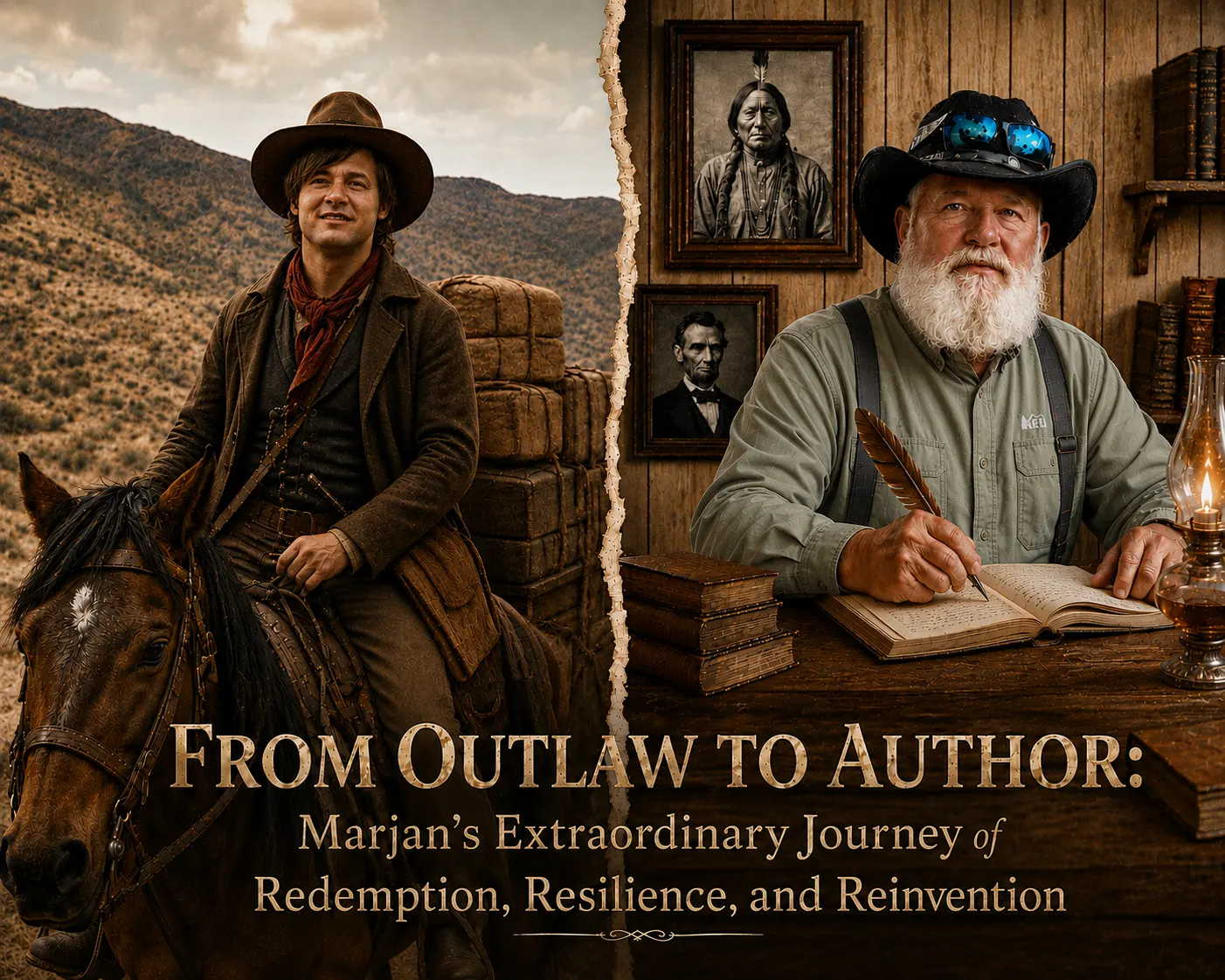
From Outlaw to Author
Marjan’s life story is remarkable not simply because of where he went, but because of where he ultimately arrived.
More than four decades ago, he walked away from a life defined by crime, danger, and instability. Seeking a different future, he moved his family to the Montana wilderness, where faith, hard work, self-reliance, and family became the foundation of a completely new life.
Over time, he built businesses, raised five children, welcomed eighteen grandchildren, and eventually turned to writing to preserve hard-earned lessons and family history. What began as a memoir became an act of reflection, healing, and reconciliation with the past.
The process revealed something unexpected: the realization that every hardship, failure, victory, and transformation had contributed to the person he eventually became. Through writing and fasting, long-buried memories resurfaced, offering new understanding and a deeper perspective.
A Story of Legacy, Resilience, and Redemption
The enduring strength of 600 Devils lies in its universality.
While the circumstances are extraordinary, the questions at the heart of the memoir are familiar to everyone:
- Can people truly change?
- How much does the past define the future?
- What responsibilities do we owe to those who sacrificed for us?
- How do we find meaning in hardship and loss?
- What kind of legacy do we leave behind?
The answers emerge through a narrative shaped by danger, faith, resilience, family, and personal transformation. Most importantly, they emerge through the example of Uncle Aloyz—a man whose courage continues to echo across generations.
Why 600 Devils Matters Today
In an age fascinated by crime stories and sensational headlines, 600 Devils offers something far more meaningful.
It is a story about consequences rather than glamour, transformation rather than notoriety, and legacy rather than self-promotion. It reminds readers that history is often shaped not only by famous leaders and public figures, but by ordinary individuals who make extraordinary choices when confronted with impossible circumstances.
Through the life of Uncle Aloyz and the remarkable journey that followed, 600 Devils stands as a testament to courage, redemption, family perseverance, and the enduring possibility of change.
Some stories entertain. Others inspire.
600 Devils does both while honoring the hero who made the story possible: Uncle Aloyz.