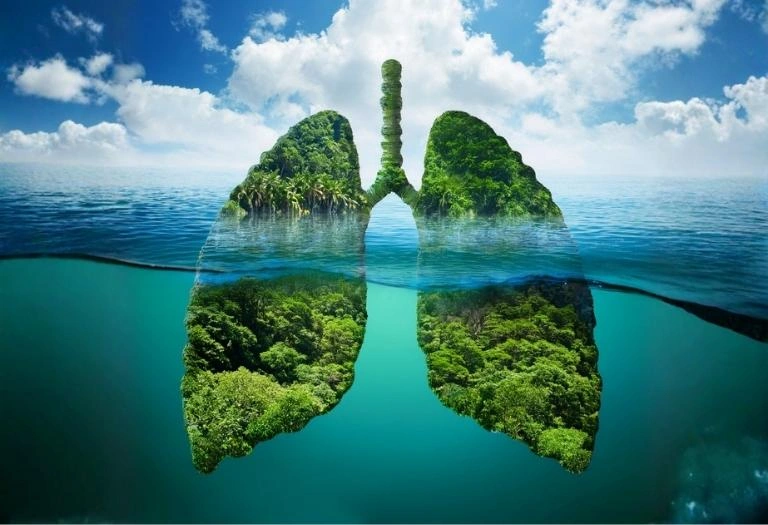
The ocean, the Amazon rainforest, and your lungs are bound together in a relationship that determines the quality and availability of the air that sustains every living thing on this planet. What is happening to two of those three systems should concern anyone who cares about the third.
Where Your Oxygen Actually Comes From
The air you breathe is not a given. It is produced continuously by living systems that can be depleted.
Roughly half of the world’s oxygen is generated by the oceans. Microscopic organisms called phytoplankton absorb sunlight and convert it into oxygen through photosynthesis, the same process that takes place in the leaves of trees and plants. This single-celled marine life, invisible to the naked eye, is responsible for sustaining half of all life on Earth through the air it produces.
The other half comes from land-based vegetation: trees, shrubs, grasses, and forests. Of terrestrial oxygen production, the Amazon rainforest alone accounts for approximately 20%, which is why it has long been referred to as the lungs of the Earth.
Both of these systems are under significant pressure.
The Ocean Oxygen Crisis
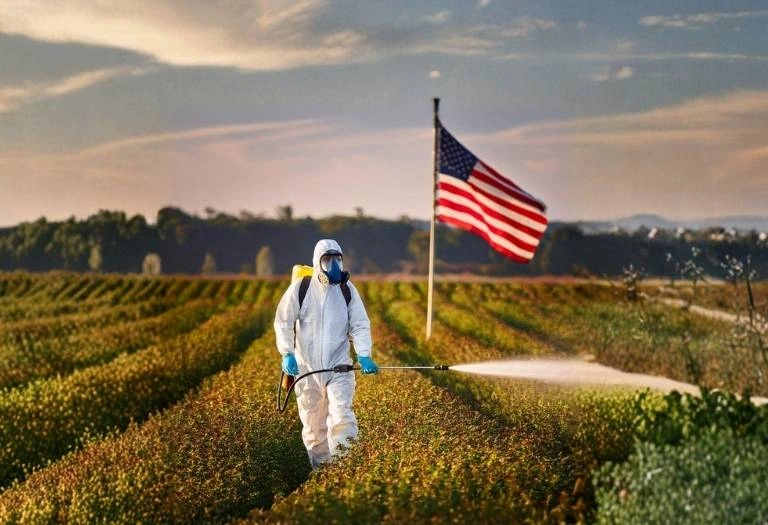
Oceanic dead zones, areas where oxygen levels have dropped so low that marine life cannot survive, have quadrupled over the last fifty years. A single dead zone off the U.S. Gulf Coast measures more than 8,000 square miles. These zones form primarily because of agricultural runoff carrying nitrogen and phosphorus into waterways, which triggers algae blooms that deplete oxygen as they decompose.
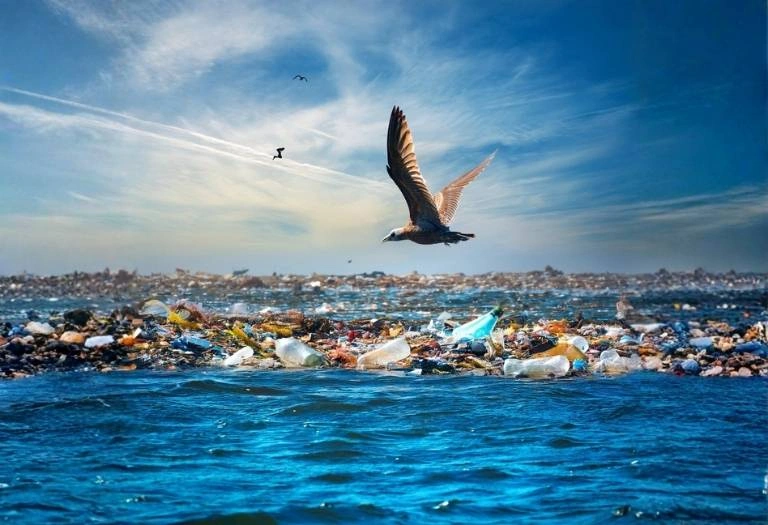
Beyond dead zones, the oceans are simultaneously facing overfishing, chemical contamination, plastic pollution, and the effects of rising water temperatures driven by climate change. By current projections, oceans could lose between 3% and 4% of their total oxygen production capacity by the end of this century.
That may sound like a small number. At a planetary scale, it is not.
The National Oceanic and Atmospheric Administration tracks trends in oxygen depletion and maintains accessible data on the scope of this problem for anyone who wants to understand the numbers in more detail.
What Is Happening to the Amazon
The Amazon rainforest is ten million years old. It is home to approximately 390 billion trees and represents the most biodiverse ecosystem on Earth. It also plays a direct role in regulating the water cycle across the entire South American continent and beyond.
Deforestation in the Amazon is currently running at roughly 10,000 acres per day, driven by agricultural expansion, illegal logging, and land seizures. Trees return water vapor to the atmosphere through transpiration, and as forest cover disappears, this function is lost. The consequences ripple outward: reduced rainfall, higher temperatures, extended dry seasons, and drought conditions that affect food production well beyond the region itself.
Scientists warn that the Amazon is approaching an ecological tipping point. Once deforestation reaches a certain threshold, the forest loses its ability to generate its own rainfall and begins an irreversible transition toward savanna grassland. Current research suggests this tipping point could arrive as early as 2050.
The World Wildlife Fund’s Amazon research, along with reporting from Brazil’s National Institute for Space Research (INPE), provides up-to-date data on deforestation rates and ecological thresholds if you want to follow this issue closely.
Air Pollution Is the Largest External Threat to Human Health
The World Health Organization classifies air pollution as the largest environmental risk to human health globally. Its data shows that 99% of the world’s population breathes air containing pollutants that exceed safe levels, with low and middle-income countries bearing the greatest burden of exposure.
One in ten deaths worldwide is attributed to diseases caused or worsened by air pollution. More than 2,000 children die every day from conditions directly linked to it. That is more than one child per minute.
These are not distant statistics. Chemical, physical, and biological agents that contaminate the atmosphere do not remain there. They enter the body with every breath, reaching cells and organs throughout the system.
The Extraordinary Complexity of Your Lungs
Of all the body’s organs, only the brain surpasses the lungs in complexity and functional range. You can survive days without food or water. You cannot survive more than a few minutes without air. Breathing is the first thing you do when you are born and the last thing you do before you die.
A few facts about the lungs that most people have never heard:
The lungs have a combined surface area roughly equivalent to a full tennis court. They contain approximately 1,500 miles of airways and between 300 and 500 million tiny air sacs called alveoli, each one wrapped in a dense network of capillaries. In those alveoli, the blood releases carbon dioxide waste and picks up fresh oxygen in a process called gas exchange, completing a cycle that occurs place with every heartbeat.
The lungs take approximately 22,000 breaths every 24 hours. The left lung is slightly smaller than the right to accommodate the heart, which sits between them in the chest cavity. The right lung is divided into three lobes; the left into two. A small amount of residual air always remains inside the lungs to prevent the alveoli and smaller airways from collapsing between breaths.
One lesser-known medical fact: lungs float on water. Forensic pathologists use this property to determine whether an infant was stillborn or breathed independently before death.
Why Oxygen Levels in the Body Matter for Disease Prevention
A shortage of oxygen does not only affect the lungs. Every organ in the body depends on it. The brain and heart have particularly high oxygen requirements and are the first to show functional decline under conditions of oxygen deprivation. The liver, kidneys, and other vital organs also require sustained oxygen delivery to function properly.
This is relevant beyond emergency medicine. Chronic low-grade oxygen deficiency, caused by shallow breathing, sedentary living, poor circulation, or heavy toxic burdens in the blood, affects organ performance in ways that accumulate over time.
Disease environments generally cannot thrive in well-oxygenated tissue. This is why exercise, exposure to fresh air, and deep breathing practices are not trivial wellness recommendations. They are physiologically significant.
What You Can Do When You Cannot Escape Polluted Air
Unlike food and water, air cannot be meaningfully filtered at the individual level in most real-world situations. You can choose organic produce, purify your drinking water, and avoid chemical-laden products, but unless you live in a filtered environment, you are breathing the same contaminated air as everyone else.
The most effective response is indirect: support the organs that filter the blood that passes through your lungs.
The liver, kidneys, and colon are the primary organs of detoxification. When these are functioning well, the blood circulating into the lungs carries a lower toxic load, and the gas exchange process operates more efficiently. Regular cleansing of these organs, through dietary discipline, fasting, and targeted detoxification protocols, is the most practical way to reduce the internal impact of air quality you cannot control externally.
Beyond that, the following practices have direct, measurable effects on lung health and oxygen capacity:
Exercise regularly. Physical activity increases lung capacity, improves circulation, and enhances the efficiency of gas exchange. Even moderate aerobic exercise performed consistently produces measurable improvements over time.
Practice deep breathing deliberately. Most people breathe shallowly throughout the day, using only a fraction of their lung capacity. Diaphragmatic breathing exercises, practiced for even ten minutes daily, expand oxygen intake and activate the parasympathetic nervous system.
Get consistent exposure to clean outdoor air. Parks, forests, and open natural spaces offer air quality measurably better than indoor or urban environments for most people, and time spent in these settings has documented benefits for both lung function and stress physiology.
Reduce indoor air pollutants. Household cleaning products, synthetic fragrances, candles, and off-gassing from furniture and building materials are significant indoor air pollutants that are within your control to address. Organizations like the Environmental Working Group provide guidance on choosing lower-toxicity alternatives.
Support detoxification through fasting. Periodic fasting gives the liver and digestive system a break from constant processing, allowing allows the body to redirect energy toward cellular repair and waste clearance. The research on fasting’s effects on metabolic health is substantial and growing.
Frequently Asked Questions
How does ocean health affect the oxygen we breathe?
Phytoplankton in the ocean produce approximately 50% of Earth’s oxygen through photosynthesis. As ocean dead zones expand and water temperatures rise, phytoplankton populations are disrupted, directly affecting global oxygen production.
What is the Amazon tipping point?
The tipping point is a threshold beyond which the Amazon rainforest can no longer generate enough internal rainfall to sustain itself. Once crossed, the ecosystem is expected to transition irreversibly toward drier savanna conditions, eliminating its role as a major oxygen producer and carbon sink. Scientists estimate this could occur by 2050 if current deforestation rates continue.
Can I detoxify my lungs directly?
The lungs do not respond well to direct detoxification in the way the liver or colon do. The most effective approach is to support the blood-filtering organs, particularly the liver, kidneys, and colon, so that the blood entering the lungs carries a lower burden of toxins. Exercise and deep breathing practices also improve lung function and capacity.
Why does oxygen matter for disease prevention?
Research indicates that disease environments are less viable in well-oxygenated tissue. Adequate oxygen supports immune function, cellular repair, and organ function throughout the body. Chronic oxygen deficiency, even at low levels, can contribute to inflammation and reduced organ efficiency over time.
What is gas exchange, and why does it matter?
Gas exchange is the process by which blood deposits carbon dioxide waste into the alveoli and picks up fresh oxygen. It occurs continuously with every heartbeat. Any factor that reduces blood quality, including toxic load, poor circulation, or compromised organ function, can impair this process.
How does deforestation affect air quality?
Trees absorb carbon dioxide and release oxygen. They also regulate local rainfall and temperature. As deforestation removes forest cover, these functions are lost or diminished, contributing to both reduced oxygen production and the broader climate disruptions that affect air quality worldwide.
Conclusion
The oxygen you depend on every second of every day is produced by systems that are being degraded in real time. The oceans are losing productive capacity to dead zones and contamination. The Amazon is being cleared at a rate that researchers say is approaching an irreversible threshold. And the air that remains is carrying a higher load of chemical, biological, and physical pollutants than at any point in recorded history.
None of this is beyond your ability to respond to, at least at the level of your own health.
Supporting your detoxification organs, exercising regularly, breathing deliberately, reducing your indoor chemical exposure, and fasting periodically are not abstract wellness recommendations. They are practical, evidence-backed responses to an environmental reality that is not going away.
Understanding the connection between these systems is the first step. Acting on that understanding is what actually makes a difference.