How Smartphones Hijacked Human Attention And What Comes Next
There is a particular kind of silence that no longer exists. The silence of waiting for a bus, in a queue, between conversations. That silence has been filled, permanently, by a glowing rectangle most of us check within three minutes of waking up.
We built smartphones to serve us. Somewhere along the way, the dynamic quietly reversed.
This is not a story about screen time guilt or digital wellness tips. It is a serious look at how deeply smartphones have restructured human cognition, behavior, and identity, and where the technology is taking us next.
A Device That Outperforms Human Memory
Your smartphone is not just a communication tool. By almost every measurable standard, it is a cognitive extension that surpasses what the human brain can do unaided.
Consider the processing power alone. The Apollo Guidance Computer that navigated astronauts to the moon in 1969 operated at roughly 0.043 MHz. The chip in a modern smartphone runs at speeds 100,000 times greater, handling navigation, real-time translation, health monitoring, and video playback simultaneously — all from a device that fits in a shirt pocket.
We used to memorize phone numbers. Now, many people pause to recall their own. That is not laziness. It is the natural result of cognitive offloading — the brain delegating tasks to external tools when those tools prove more reliable.
The issue is that offloading memory is one thing. Offloading attention is another.
The Architecture of Distraction
Every buzz, ding, and notification is not an accidental design. It is the product of deliberate engineering.
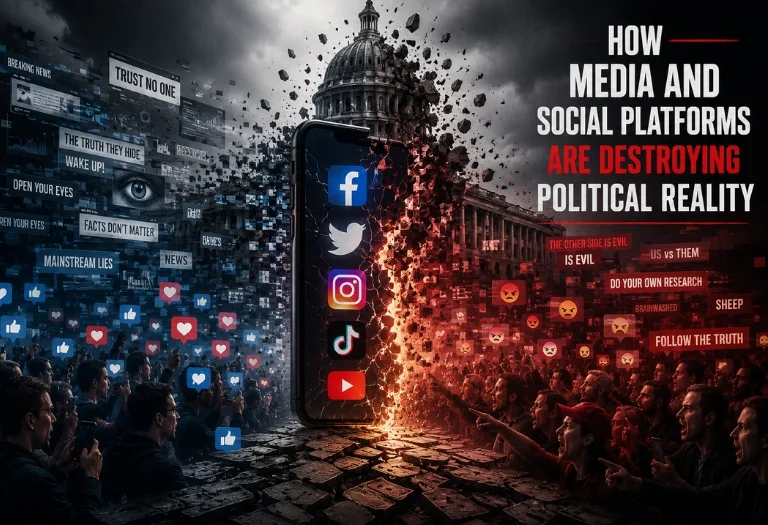
The average person receives dozens of app notifications daily. Each one triggers a small dopamine response — the same neurological reward loop that makes gambling addictive. Research published in the Journal of Experimental Psychology found that even receiving a notification you do not act on significantly reduces cognitive performance. The phone does not need you to pick it up. Knowing it buzzes is enough to fracture concentration.
This is why it is entirely possible to lose 20 minutes to a video you had no intention of watching. The platform did not exactly trick you. It simply understood your behavior patterns better than you were monitoring them.
What Your Phone Actually Knows About You
The data your smartphone collects is far more intimate than most people realize.
Your device tracks where you go, how long you sleep, how many steps you take, and the emotional cadence of your messages. It can infer your mood from typing speed, your health status from app usage patterns, and your location history down to which floor of a building you were on.
Studies on smartphone sensor data have demonstrated that behavioral signals collected passively from phones can predict depression, anxiety, and cognitive decline sometimes before users are aware of symptoms themselves.
On the commercial side, that data fuels an advertising ecosystem worth hundreds of billions of dollars annually. The experience of whispering about a health concern and then seeing targeted ads minutes later is not imagination. It is the logical output of always-on microphone permissions, behavioral modeling, and probabilistic advertising — a system documented extensively by privacy researchers and described in detail by the Electronic Frontier Foundation.
There is also a more immediate physical risk that rarely gets discussed. Third-party and counterfeit charging cables have caused documented cases of thermal runaway — rapid, uncontrolled heating that has resulted in fires. The Consumer Product Safety Commission has recorded phone-related fire incidents involving unsafe chargers used during sleep. The device you keep under your pillow deserves more scrutiny than most people give it.
The Theft Economy Built Around Your Digital Life
Cell phones are among the most stolen items globally — not primarily for their hardware value, but for the data they contain.
A stolen smartphone gives a thief immediate access to banking apps, saved passwords, email accounts, and two-factor authentication codes. The physical device is secondary. Your digital life is the asset.
This has created an entire underground market for unlocked stolen devices, with resale networks operating across borders. Security features like remote wipe and biometric locks help, but they are only as effective as the preparation that precedes the theft. Backing up data and enabling remote wipe before losing your phone is the kind of practical step most people postpone indefinitely.
The Near Future of Smartphone Technology
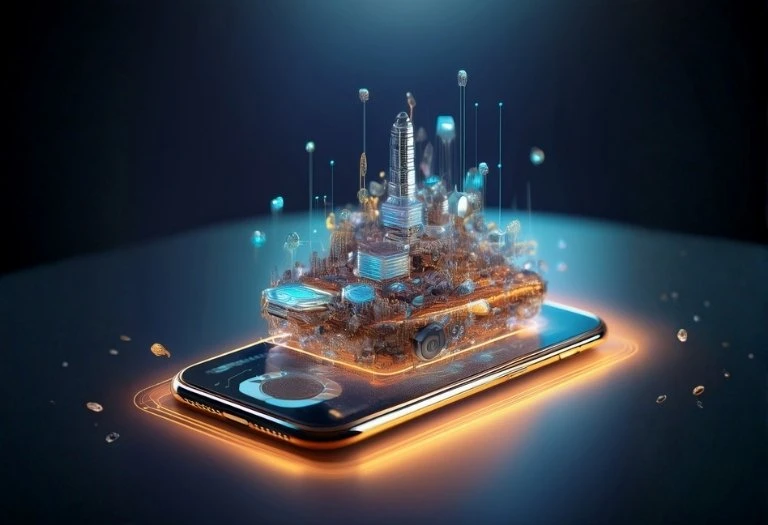
The smartphone as a physical object is approaching the end of its current form. The next decade will likely render the glass-and-aluminum rectangle obsolete, not because it fails, but because it gets absorbed into everything around us.
Several directions are already in motion.
Ambient and Projected Displays
Research teams at MIT, Google, and Samsung are developing display technologies that project onto any nearby surface — a wall, a desk, the back of your hand. The phone becomes a projector rather than a screen. Mixed-reality glasses, already demonstrated by several major technology companies, will overlay information directly onto what you see without requiring you to look down at a device.
Brain-Computer Interfaces
This is the development most likely to redefine human communication. Companies like Neuralink and Synchron are actively developing devices that read neural signals. Non-invasive EEG headsets capable of detecting intent with increasing accuracy are already commercially available. The practical trajectory points toward a future where composing a message requires thought rather than touch.
The implications are significant. Text composed from conscious thought would be fast and frictionless. Text composed from subconscious impulse would be another matter entirely. The social guardrails humans currently rely on — the pause before sending, the deleted draft — may not survive the transition to thought-based input.
AI as a Personal Cognitive Layer
The AI assistant on your phone today is a preview of something considerably more integrated. Within the next decade, AI systems will likely function as persistent cognitive layers, not responding to queries but anticipating them. Managing your schedule, filtering your information environment, mediating your communications, and presenting curated versions of reality based on your inferred preferences.
That last part warrants attention. An AI that curates your information environment based on what it predicts you want to see is not a neutral service. It is a filter. Research on algorithmic curation has consistently found that personalization systems amplify existing beliefs and reduce exposure to contradictory information — a dynamic that operates on smartphones today and will intensify as AI becomes more capable.
Ambient Power and Invisible Devices
Future devices will likely charge passively from ambient light, kinetic motion, or wireless power fields, removing the last remaining behavioral interruption caused by the current battery cycle. When a device requires no deliberate maintenance, the psychological boundary between the device and the self erodes further.
The Deeper Question Nobody Asks Enough
The technology is not the problem. Human attention is finite, and the competition for it is intense and sophisticated. The question worth sitting with is not how to use your phone less, but how to use it with intention rather than reflex.
Cognitive researchers who study digital attention and habit formation suggest that behavioral change starts not with restriction but with awareness — specifically, the habit of noticing the moment before you reach for the device. That half-second pause is where agency lives.
The tools are extraordinarily powerful. The people using them deserve to be equally deliberate.
Frequently Asked Questions
Are smartphones actually addictive?
The term addiction is clinically precise, and smartphone use does not meet the full diagnostic threshold for substance addiction. However, behavioral researchers have identified compulsive use patterns driven by the same dopamine-based reward mechanisms present in gambling disorders. The American Psychological Association recognizes problematic smartphone use as a genuine behavioral concern, distinct from clinical addiction but worth addressing seriously.
How much data does my smartphone collect about me?
The scope varies by device, operating system, and the permissions granted to the apps. At minimum, most smartphones collect location history, usage patterns, contact data, and behavioral metadata. Apps with microphone, camera, or sensor permissions collect considerably more. Reviewing app permissions in your phone’s privacy settings is the most direct way to audit your current exposure.
Will smartphones be replaced by brain-computer interfaces?
Not immediately. Brain-computer interface technology is advancing rapidly, but remains years from mass-market viability for general consumers. The more likely near-term trajectory is a hybrid period where smartphones integrate with wearables and AR glasses before gradually ceding primacy to more direct interfaces. The full transition, if it happens, is likely a decade or more away.
Is it safe to charge your phone overnight?
With certified original chargers and cables, overnight charging is generally safe on modern devices, which include overcharge protection. The risk increases significantly with uncertified third-party accessories, damaged cables, or devices placed on soft surfaces that restrict heat dissipation. Charging on a hard, flat surface, away from flammable materials, reduces the risk considerably.
Can my phone hear my private conversations?
Most major technology companies officially deny continuous passive listening for ad targeting, citing the battery drain it would cause. However, the granularity of behavioral ad targeting is such that many users reasonably question this. A documented alternative explanation is that advertisers use location data, browsing behavior, and social graph correlations to produce ad targeting that feels uncannily accurate without requiring direct audio surveillance.
Conclusion
Smartphones are the most consequential objects most humans have ever owned. They have compressed the sum of human knowledge into a pocket, connected billions of people across geography and language, and measurably extended human capability in dozens of directions.
They have also restructured how we think, rest, communicate, and pay attention — largely without our explicit consent.
The technology will continue developing at a pace that outstrips most people’s ability to adapt consciously. Brain-computer interfaces, ambient AI, and projected displays are no longer speculative. They are engineering problems being actively solved.
The most useful thing any of us can do in the meantime is approach these tools with the same critical thinking we would apply to any system with this much influence over our lives. Not with fear, and not with uncritical enthusiasm — but with the clear-eyed recognition that what shapes our attention shapes us.
This article is published in connection with Marjan Books, where author Marjan explores technology, human behavior, and related themes across articles, videos, and long-form writing.