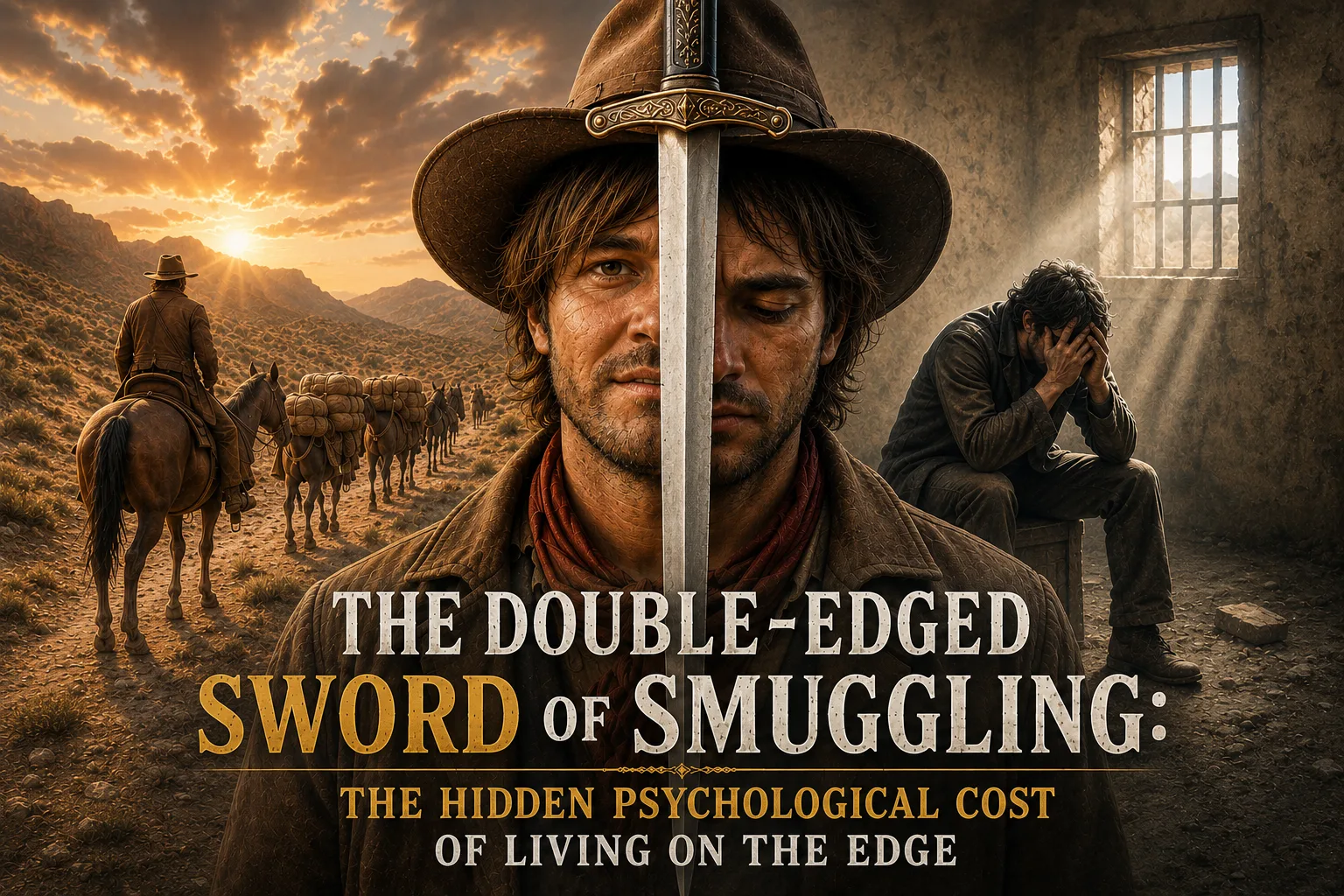
The Double-Edged Sword of Smuggling: Freedom, Fear, and the Hidden Psychological Cost
How crossing borders for profit can slowly erode identity, morality, and peace of mind—even as it seduces people with the promise of freedom, danger, and belonging.
There is a strange contradiction at the heart of smuggling.
On one side lies excitement, freedom, fast money, adventure, and the intoxicating belief that you are living outside the rules that govern ordinary people. On the other side waits anxiety, paranoia, exhaustion, isolation, and the slow erosion of the human nervous system.
Most people only see one edge of the blade.
They either romanticize smuggling as a Hollywood adventure or condemn it without understanding why intelligent people are drawn into it in the first place. The truth is far more complicated. Smuggling is not merely a criminal enterprise. It is a psychological environment. It reshapes behavior, rewires the body’s stress response, sharpens survival instincts, and alters perception until danger itself begins to feel normal.
That is what makes it so seductive—and so destructive.
The Allure of Living Beyond the Border
For centuries, smugglers have occupied a strange place in the public imagination.
Stories of hidden cargo, secret routes, daring escapes, and close calls have inspired books, films, and legends. Whether operating along coastlines, deserts, jungles, or international borders, smugglers often become symbols of rebellion against authority.
But the attraction usually runs deeper than money.
Many people enter dangerous worlds because they are searching for something missing from ordinary life. Adventure. Purpose. Brotherhood. Identity. Escape.
As Marjan writes in 600 Devils:
“Being legal or illegal often depended upon what side of a border I was standing on.”
That simple observation exposes a deeper reality. Borders are not merely lines on maps. They are places where legality, survival, culture, and human instinct collide. What is forbidden on one side may be accepted on the other. The moral certainty many people take for granted begins to blur.
In that environment, a person can easily convince himself that he is not breaking rules—he is merely navigating them.
The Adrenaline Addiction Nobody Talks About
The public often assumes money is the primary motivation behind smuggling. Money certainly matters.
But adrenaline can become even more addictive.
Every border crossing carries uncertainty. Every inspection station creates tension. Every unexpected delay triggers a surge of stress hormones. Every suspicious glance from an official sends another wave of cortisol and adrenaline through the bloodstream.
At first, the sensation feels empowering. You feel sharper. More alert. More alive. Ordinary life starts to seem slow, boring, and colorless by comparison.
The nervous system begins mistaking intensity for meaning.
This is one of the least understood aspects of life in high-risk environments. The human brain becomes conditioned to operate under pressure. Excitement and danger merge until the two become difficult to separate.
The result is a powerful biochemical addiction that many former smugglers, soldiers, law enforcement officers, and extreme adventurers recognize immediately.
Peace begins to feel boring. Chaos feels normal.
Hypervigilance: When Survival Becomes a Lifestyle
The problem is that the body was never designed to remain in survival mode indefinitely. Yet that is exactly what prolonged smuggling demands.
Marjan describes this reality with brutal honesty:
“It made perfect sense to view everyone as a cop so that I wouldn’t end up in Bangkok’s Klong Prem Central prison.”
That mindset is not paranoia. It is adaptation.
The brain learns that mistakes carry consequences. Over time, it becomes sharper and increasingly sensitive to potential threats. The nervous system remains on high alert, scanning constantly for danger.
Eventually, hypervigilance stops being a tool and becomes a permanent condition.
Former participants in dangerous lifestyles often discover that they continue scanning rooms years later. They notice exits automatically. They distrust strangers. They struggle to relax in situations where there is no danger.
The threat may be gone. The conditioning remains.
Brotherhood, Belonging, and the Search for Identity
One of the most overlooked aspects of smuggling is the sense of belonging it provides.
Many people imagine criminal organizations as collections of hardened outlaws motivated purely by greed. Reality is often more complicated. Human beings crave connection. They want to belong to something larger than themselves.
In 600 Devils, Marjan reflects:
“I had only wanted to escape the sour halitosis of middle-class decay and the dead-end ramblings of my philosophy professors at the University of Wisconsin. Mario made me feel like I belonged, and I willfully flicked on the felonious switch.”
That statement reveals a profound truth.
People frequently drift into dangerous worlds because those worlds offer identity. They provide clear roles, shared risks, mutual dependence, and a sense of purpose that many individuals struggle to find elsewhere.
The underground economy often functions as a substitute tribe. And tribes are difficult to leave.
The Hidden Cost of Chronic Stress
The most dangerous consequence of smuggling is not necessarily arrest. It is cumulative stress.
The human body keeps score. Years of elevated cortisol levels affect nearly every system in the body. Sleep deteriorates. Blood pressure rises. Anxiety increases. Relationships suffer. Decision-making becomes distorted. The constant need to remain alert gradually exhausts the mind.
Marjan captures this internal breakdown in almost spiritual language:
“All the cells in my being were trying to shut their tiny little doors to keep out the sudden infestation of the dragon and his hordes of relentless devils.”
Whether interpreted literally, psychologically, or metaphorically, the image conveys the same reality: prolonged exposure to danger eventually invades the inner life.
The battle moves from the border to the mind.
When Adventure Turns Into Something Darker
Many memoirs romanticize danger. The most honest ones reveal its consequences.
One of the most revealing passages in 600 Devils occurs during what appears to be an adventure:
“The pilot taxied us to the edge of the jungle where an old, dilapidated military jeep waited to take us to a place I was no longer sure I wanted to go.”
That sentence captures the moment when excitement begins transforming into dread. Nearly every dangerous lifestyle contains such moments. The thrill remains. But certainty disappears.
What once felt empowering begins to feel consuming. The road that promised freedom reveals its hidden destination.
Why Former Smugglers Often Miss the Life They Escaped
Perhaps the greatest paradox is that many people who leave dangerous worlds still miss parts of them. Not the fear. Not the criminality. Not the consequences. What they miss is the intensity.
Modern life often encourages routine, predictability, and comfort. Smuggling provides the opposite. Every day matters. Every decision has consequences. Every moment demands attention.
In high-risk environments, people become fully present. Alive. Time slows down. Awareness sharpens. Life feels immediate. That experience can be difficult to replace once it is gone. And that is what drew Marjan back into adventure and undercover work, working for what he describes as an “adjunct arm” of a Senate Subcommittee.
Marjan often reflected on the psychological pull of that world: “Danger has a way of stripping life down to its essentials. You stop worrying about yesterday and tomorrow because all that exists is the next decision.”
He also noted that the attraction was not recklessness, but intensity: “Most people think adventure is about seeking danger. It isn’t. It’s about feeling completely awake.”
The transition back to ordinary life proved challenging. “Once you’ve lived in a world where every choice matters, normal life can feel like watching the game from the stands instead of being on the field.”
Looking back, he describes the experience as both rewarding and costly. “Living on the edge teaches you things few people ever learn, but it also changes the way you see the world. After that, ordinary life is never quite ordinary again.”
The Psychological Borders We Cross
Ultimately, smuggling is not only about moving goods across physical borders. It is about crossing invisible psychological borders inside ourselves. Every risk changes us. Every deception leaves residue. Every close call reshapes perception. Some emerge wiser. Some emerge broken. Most emerge carrying a mixture of scars, memories, lessons, and regrets.
That complexity explains why stories such as 600 Devils resonate so powerfully with readers. Beneath the criminality lies something deeply human: the search for freedom, meaning, belonging, adventure, and identity.
The problem is that shortcuts through chaos eventually exact a price.
Final Thoughts: The Blade Cuts Both Ways
The public conversation about smuggling is often trapped between two extremes. One side glamorizes it. The other side condemns it.
Neither tells the full story.
Smuggling is a study in human extremes—freedom and fear, exhilaration and exhaustion, intelligence and recklessness, survival and self-destruction. It reveals both the remarkable adaptability of the human spirit and its vulnerability to temptation.
The human body can outrun bullets longer than it can outrun stress. The mind can justify danger longer than it can endure its consequences.
And that is why the smuggling blade cuts both ways. It offers excitement, purpose, and intensity.
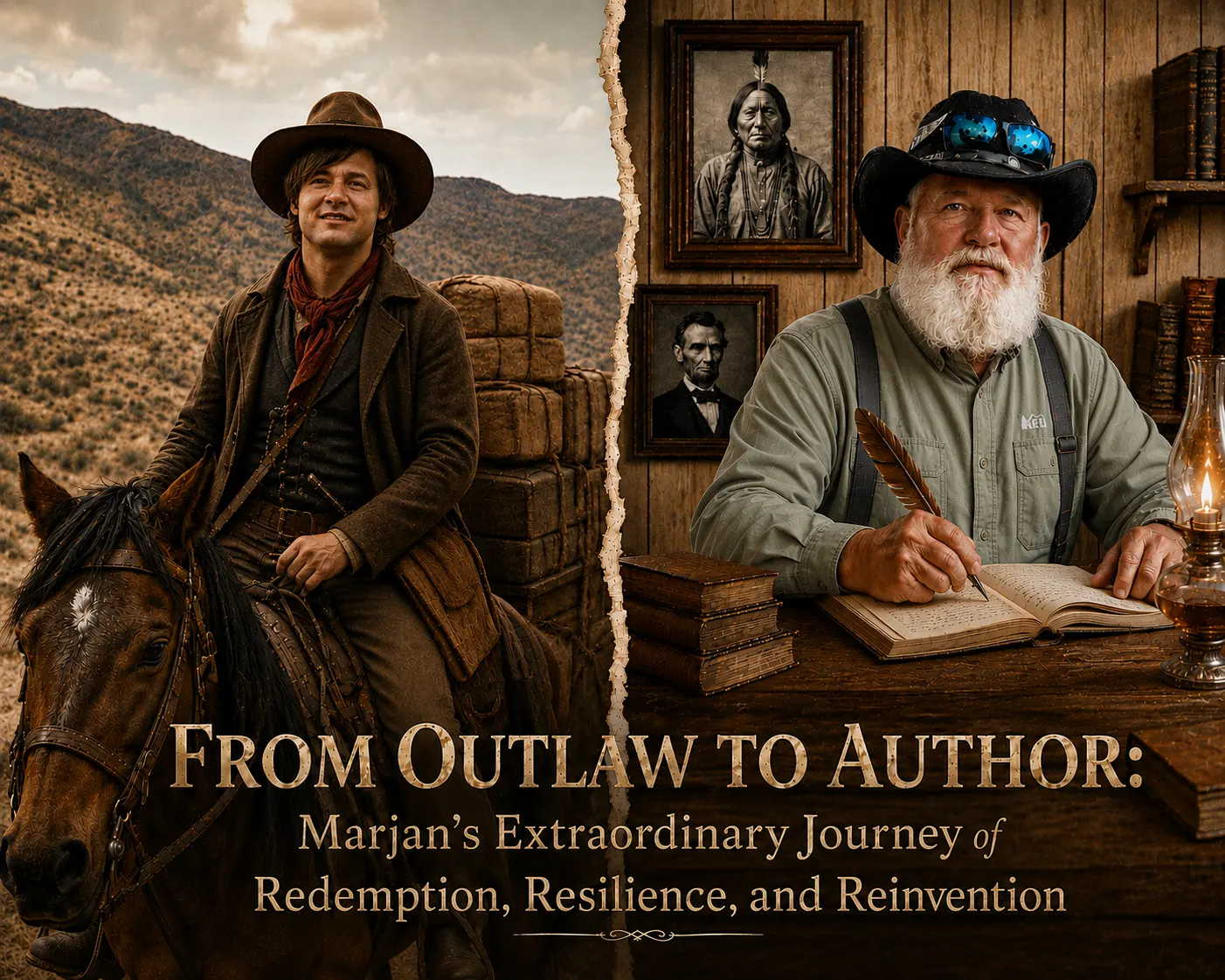
But eventually, it demands a price. A fortunate few live long enough to tell the story. Marjan was able to tell his stroy from outlaw to author.