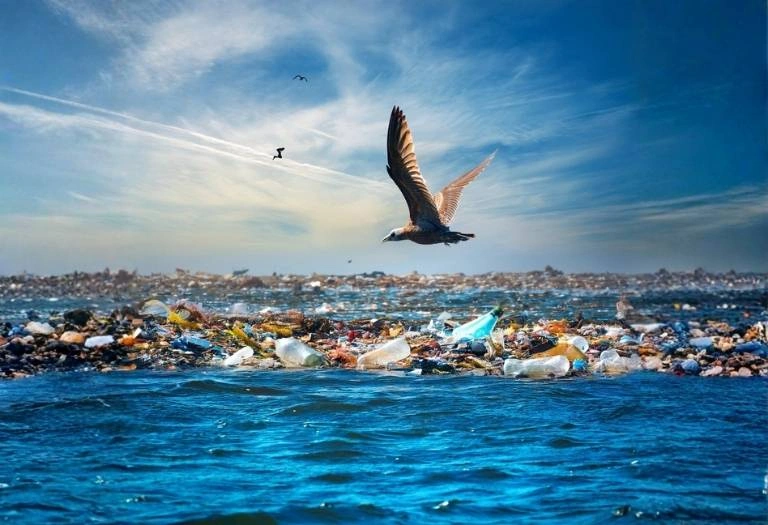
Plastic: Environmental Boon or Global Curse?
Plastic is everywhere. It wraps our food, builds our cars, holds our medicine, and lines our homes. In less than a century, it became one of the most dominant materials on Earth. But that dominance has come at a catastrophic cost.
What was engineered for convenience has turned into one of the most persistent environmental threats humanity has ever created. And the worst part? Most of it is still out there, and it is not going away.
What Makes Plastic So Dangerous?
Synthetics are generally manufactured from fossil fuels, which means they are not biodegradable. Unlike organic materials that decompose and return to the earth, plastic simply breaks apart into smaller and smaller fragments over hundreds of years. It does not disappear. It just gets harder to see and far more dangerous to encounter.
The U.S. Environmental Protection Agency has noted that virtually every piece of plastic ever produced still exists in some form today. That single fact should stop us in our tracks.
The Scale of the Plastic Waste Problem
The numbers are difficult to absorb, but they are important to understand.
Globally, approximately 280 million tons of plastic are generated as waste every year. The United States alone contributes around 42 million tons of that figure, making it the world’s largest generator of plastic waste. Roughly 22% of all plastic waste ends up as litter in the environment rather than being managed through any kind of managed waste system.
Projections suggest that if current trends continue, plastic waste could exceed one billion tons annually within the next four decades. The downstream consequences for public health, wildlife, and ecosystems are enormous and still not fully understood.
Microplastics: The Invisible Threat Inside Us
As larger plastic items degrade, they fragment into microscopic particles known as microplastics. These particles are small enough to travel through air, water, and soil, and they do.
Microplastics have been detected in drinking water supplies, in the air we breathe, in agricultural soil, and in human blood and organs. A growing body of scientific research, including studies published by institutions such as the National Institute of Health, has linked exposure to plastic microfibers to serious health consequences, including disruption of the endocrine system, hormonal imbalances, neurological and developmental disorders, reproductive issues, immune dysfunction, respiratory problems, and certain cancers.
We are not waiting for future contamination. The contamination is already inside us.
Ocean Gyres and the Great Pacific Garbage Patch
Plastic does not simply sink into obscurity when it enters the ocean. Ocean currents gather and concentrate floating debris into massive accumulation zones called gyres. There are five major gyres in the world’s oceans, and each acts as a slow-moving trap for plastic waste, holding it in circulation for decades, sometimes centuries.
The largest of these is the Great Pacific Garbage Patch, located between Hawaii and California. This accumulation zone covers an area roughly twice the size of Texas and weighs an estimated 100,000 tons. According to The Ocean Cleanup, the plastic concentration in this gyre amounts to approximately 250 pieces of debris per person on the planet.
That is not a patch. It is a monument to unchecked waste.
The Devastating Impact on Marine and Wildlife
The consequences for marine life are severe and well-documented.
Sea turtles caught near gyre zones have been found with plastic comprising up to 74% of their stomach contents. Across the broader animal kingdom, plastic kills an estimated 100 million animals every year, including seabirds, marine mammals, fish, and other ocean creatures. These are only the deaths we are able to document.
Some animals have been found with stomachs so packed with plastic that their natural hunger signals were suppressed, leading to starvation even though they had full stomachs.
Plastic litter entering the ocean each year ranges from 8 million to 10 million metric tons, accounting for approximately 80% of all annual marine pollution. Floating debris can drift for years before washing ashore or being consumed by wildlife. Research from Portland State University found microplastics in nearly every seafood sample collected along the west coast of the United States. A separate study identified around 210 edible marine species that ingest plastic debris as part of their feeding behavior.
The plastic accumulating on the ocean floor adds another layer of complexity that scientists are still struggling to assess with any precision.
What Needs to Happen Now
This is not a problem that any single government, company, or individual can solve alone. It requires coordinated, scaled action across every level of society.
Here is what that looks like in practice:
Policy and Industry
- Enact and enforce legislation that limits unnecessary plastic production.
- Hold manufacturers accountable for the full lifecycle of their packaging.
- Invest in next-generation biodegradable materials that can replace conventional plastics.
- Fund and scale global cleanup campaigns in high-impact zones.
- Find effective ways to detoxify. Read Fasting Firepower by Marjan.
Infrastructure and Innovation
- Improve waste collection and recycling systems, particularly in regions with low infrastructure.
- Develop technologies that convert discarded plastic into useful materials, including road construction materials.
- Prevent plastic from entering rivers and coastal areas before it reaches the ocean.
Individual Action
- Refuse single-use plastics wherever alternatives exist.
- Switch to reusable bags, bottles, and containers.
- Avoid products with excessive or unnecessary plastic packaging.
- Support organizations working directly on solutions to plastic pollution, such as Plastic Pollution Coalition.
Small individual choices matter, but they only move the needle when paired with structural change at scale.
Frequently Asked Questions
Is all plastic equally harmful to the environment?
Not exactly. Some plastics degrade faster than others, and certain types are more readily recyclable. However, no conventional plastic is truly biodegradable, and all plastic carries some risk of fragmenting into microplastics over time.
What are microplastics, and why are they dangerous?
Microplastics are tiny fragments that result from the physical breakdown of larger plastic items. They are dangerous because they enter food chains, water supplies, and even the human body, where they have been linked to hormonal, immune, and neurological disruption.
Can plastic pollution be reversed?
Partially. Cleanup efforts can remove significant quantities of plastic from ecosystems, and reducing new plastic input would help stabilize the problem. However, the microplastics already embedded in soil, water, and biological organisms cannot currently be fully removed.
What is the Great Pacific Garbage Patch?
It is the largest known accumulation of ocean plastic, located between Hawaii and California. It is held in place by circular ocean currents and covers an area roughly twice the size of Texas.
How can I make a meaningful difference?
Reducing your personal plastic use, supporting legislative efforts, choosing brands that use sustainable packaging, and donating to credible environmental organizations are all meaningful steps. Collective consumer pressure has historically influenced corporate behavior.
Conclusion
Acrylic or Polymethyl Methacrylates gave us convenience at a price we are only beginning to fully calculate. It is in our oceans, our food, our air, and our bodies. The crisis is not approaching. It is already here.
The question is no longer whether plastic pollution is a serious problem. The question is whether we are willing to make the hard decisions, both individually and collectively, to stop making it worse and start building our way out of it.
For more on environmental health, detoxification, and holistic wellness, explore the resources available at Marjan Books.