
AI is no longer a concept confined to research papers or science fiction. It is embedded in the tools we use every day, the systems that govern access to credit and healthcare, and the decisions that shape geopolitical strategy. Understanding AI today is not optional. It is one of the most important things any informed person can do.
This article takes an honest, grounded look at what AI can and cannot do, the real risks it carries, and what responsible development should look like going forward.
The Scale of What AI Can Actually Do
To appreciate why AI commands so much attention, you first have to understand what it is capable of. Modern AI systems can process billions of data points in milliseconds. Tasks that would take a team of human researchers years to complete, such as analyzing protein structures or identifying patterns across massive datasets, can now be done in a fraction of the time.
DeepMind’s AlphaFold project demonstrated this vividly by mapping the structures of nearly every known protein on Earth, a breakthrough that scientists had been working toward for decades. That single achievement is expected to accelerate drug discovery and medical research by years.
Beyond scientific applications, AI is now embedded in healthcare diagnostics, financial modeling, logistics, content creation, and consumer technology. Voice assistants like Alexa and Siri are the most visible faces of AI for most people, but they represent only a small slice of what the technology is doing behind the scenes.
Where AI Is Already Transforming Industries
Healthcare
AI is being used to detect cancers in medical imaging earlier than trained radiologists in some controlled studies. It is also being applied to drug development timelines, patient risk scoring, and hospital resource allocation.
Finance
Lending decisions, fraud detection, and high-frequency trading all rely heavily on AI-driven models. The speed and pattern recognition capabilities that make AI valuable in finance also make it a systemic risk if those models behave unexpectedly.
Education and Research
AI tutoring tools are beginning to adapt in real time to individual learning patterns. In research, AI is accelerating literature reviews, hypothesis generation, and experimental design across disciplines.
Security and Surveillance
Governments and corporations are deploying AI for facial recognition, behavioral analysis, and predictive policing. These applications raise serious civil liberties concerns, particularly where oversight is weak or absent.
The Risks That Do Not Get Enough Attention
Concentration of Power
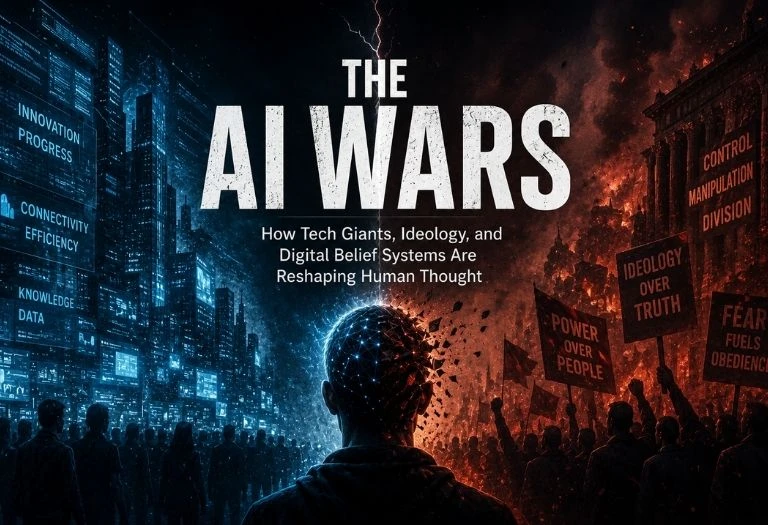
Perhaps the most underappreciated risk is structural. A handful of technology companies and nation-states control the most powerful AI systems. OpenAI, Google DeepMind, Meta AI, Microsoft, Apple, and Amazon are not neutral parties. They are profit-driven organizations whose interests do not automatically align with public welfare. The data AI is trained on, the constraints built into these systems, and the decisions about where AI is deployed are all made by a very small group of people operating largely without external accountability.
This concentration of capability without proportional accountability is not a future concern. It is the current reality.
The Black Box Problem
Many of the most powerful AI models operate without transparency. You can observe what goes in and what comes out, but the internal decision-making process is largely opaque, even to the engineers who built the system. This makes it extremely difficult to audit AI decisions for fairness, accuracy, and bias, particularly in high-stakes domains such as criminal sentencing, medical diagnosis, or loan approval.
Model Collapse and AI Feedback Loops
As AI-generated content spreads across the internet, an increasing share of the data used to train new models is itself AI-generated. Researchers refer to this as model collapse. When a model trains on synthetic data generated by earlier models, it tends to amplify existing biases and lose the diversity and nuance of authentic human-generated content. Research published in Nature has highlighted the long-term degradation risks this feedback loop.
Deepfakes and the Erosion of Trust
AI can now produce photorealistic images, video, and audio of real people saying and doing things they never said or did. The barrier to creating convincing disinformation has dropped dramatically. This has implications for political discourse, legal proceedings, journalism, and personal reputation.
The Geopolitical Dimension
The United States, China, and Russia are each pouring enormous resources into AI development and are deeply resistant to binding international regulation. The concern driving that resistance is consistent: if we agree to limits and our rivals do not follow them, we fall behind.
This logic is almost identical to the one that drove nuclear weapons proliferation. And like nuclear weapons, AI is already being adapted for military use, including autonomous weapons systems, cyber offensive capabilities, and surveillance infrastructure.
Once leading nations normalize the development of AI-enabled weapons, smaller states and non-state actors will follow. The barriers to entry for using AI in conflict are far lower than they were for nuclear weapons. Drone warfare is already demonstrating what happens when AI-enhanced tools reach non-state actors with few constraints.
The difference between an AI arms race and a nuclear one is speed. Nuclear programs took years to develop. AI capabilities can be replicated, fine-tuned, and deployed in months.
What Responsible AI Development Actually Requires
Identifying risks is the easier part. The harder question is what to do about them.
International Agreements with Real Enforcement
Similar to arms control treaties, AI development needs enforceable international frameworks, not voluntary guidelines. The EU AI Act is one of the first legislative attempts to regulate AI by risk category, and while its enforcement remains to be tested, it represents a meaningful model for what governance could look like.
Mandatory Transparency
High-stakes AI systems, particularly those used in healthcare, criminal justice, financial access, and public infrastructure, should be subject to mandatory disclosure requirements. That includes the data they were trained on, the decisions they make, and the error rates they produce.
Keeping Humans in the Loop
For consequential decisions, AI should inform and support human judgment, not replace it. The goal should be augmentation, not automation. The risk is not that AI becomes sentient and decides to harm us. The more immediate risk is that humans progressively defer to AI outputs without maintaining the critical judgment to know when those outputs are wrong.
Preserving Cognitive Diversity
If AI systems trained on the same datasets increasingly mediate how people access information, form opinions, and make decisions, the result could be a narrowing of human thought at scale. Maintaining diverse sources of information, education systems that build critical thinking, and genuine intellectual independence is not a soft cultural concern. It is a prerequisite for catching AI errors before they compound.
Frequently Asked Questions About Artificial Intelligence
What makes modern AI different from earlier computer programs?
Earlier programs followed fixed rules written explicitly by programmers. Modern AI, particularly machine learning systems, learns patterns from data rather than following hardcoded instructions. This gives it far greater flexibility but also makes its behavior harder to predict and audit.
Can AI become more intelligent than humans?
This is an open and genuinely contested question. Current AI systems are narrow, meaning they perform well on specific tasks but lack general reasoning abilities. Whether artificial general intelligence, a system capable of flexible reasoning across domains comparable to a human, is achievable, and when, remains debated among leading researchers.
Who is responsible when an AI system causes harm?
This is one of the most pressing unresolved legal and ethical questions. Liability currently falls somewhere between the company that built the model, the organization that deployed it, and the individual who used it. Most jurisdictions do not yet have clear frameworks for assigning responsibility.
Is AI-generated content a threat to journalism and creative work?
It creates genuine pressure on both. The economic model of content creation is changing rapidly as AI lowers the cost of producing text, images, and video. The long-term effect on quality, trust, and the livelihoods of journalists, writers, and artists is still unfolding.
What can individuals do to engage with AI responsibly?
Staying informed is the most important starting point. Understanding how AI systems work, what data they are trained on, and where they are being deployed helps people engage critically rather than passively accept AI outputs as authoritative.
Where This Is All Headed
AI holds genuine promise. Its capacity to accelerate scientific discovery, expand access to expertise, and handle tasks that consume human time without adding human value is real. Those benefits deserve to be taken seriously.
But so do the risks. The trajectory of AI development is not fixed. It is being shaped right now by decisions made in boardrooms, legislatures, research labs, and militaries around the world. The question of who benefits from AI, who is protected from its failures, and who ultimately controls it is not a technical question. It is a political and moral one.
The humans closest to these decisions have an obligation to get them right. And the rest of us have an obligation to pay attention.
Conclusion
AI is not something happening to us from the outside. It is being built by people, funded by organizations, and governed by the choices societies make or fail to make. The technology’s power is genuinely extraordinary. The risks of developing it without adequate oversight, transparency, and international cooperation are equally real.
The most important thing is not to treat AI as either a savior or a villain. It is a tool of remarkable capability being deployed at a speed that outpaces our current systems of accountability. Closing that gap is one of the defining challenges of the next decade.