Healthy Aging: The Longevity Blueprint for Living Longer and Better
Healthy aging is one of the most important goals of modern health research. People have searched for ways to extend life for thousands of years, from ancient quests for mythical fountains of youth to today’s cutting-edge biotechnology and anti-aging therapies. Yet despite remarkable scientific advances, the foundations of healthy aging remain surprisingly simple. Research increasingly suggests that longevity is influenced less by miracle interventions and more by consistent daily habits practiced over decades.
Yet despite remarkable advances, the foundations of healthy aging remain surprisingly simple.
Research increasingly suggests that longevity is influenced less by miracle interventions and more by everyday habits repeated consistently over decades. Physical activity, quality sleep, metabolic health, emotional resilience, social connection, and strategic fasting all appear to play significant roles in determining not only how long people live but also how well they age.
These principles form the foundation of a growing body of evidence showing that healthy aging is often built through discipline rather than shortcuts.
Why Chronic Disease Threatens Modern Longevity
Medical innovation has dramatically improved emergency care, infectious disease treatment, and surgical outcomes. Yet chronic illnesses continue to affect millions worldwide.
Among the most common age-related health challenges are:
- Obesity
- Type 2 diabetes
- Cardiovascular disease
- Metabolic syndrome
- Cognitive decline
- Chronic inflammation
- Autoimmune disorders
- Depression
While average lifespan has increased in many countries, healthspan—the number of years spent in good health—has not always kept pace.
Many experts believe modern lifestyles contribute significantly to this trend.
Common contributors include:
- Highly processed foods
- Excessive sugar consumption
- Sedentary behavior
- Sleep deprivation
- Persistent stress
- Excessive screen exposure
- Social isolation
- Constant stimulation and distraction
The human body evolved in environments characterized by movement, scarcity, adaptation, and recovery. Modern life often provides the opposite.
Fasting and Metabolic Health: An Ancient Practice Rediscovered
One of the most discussed topics in longevity research today is fasting.
Far from being a modern trend, fasting has existed throughout human history. People fasted due to seasonal food shortages, travel, labor demands, spiritual traditions, and natural eating patterns.
Today, many individuals consume food continuously throughout the day:
- Breakfast
- Mid-morning snacks
- Lunch
- Sugary beverages
- Afternoon snacks
- Dinner
- Late-night eating
As a result, the body may spend relatively little time in a true fasting state.
Researchers studying metabolic health have become increasingly interested in fasting because it may support:
- Improved insulin sensitivity
- Better blood sugar regulation
- Reduced inflammation
- Enhanced metabolic flexibility
- Improved cellular maintenance
- Greater fat utilization for energy
Rather than focusing solely on calorie reduction, fasting introduces periods during which the body can shift resources away from digestion and toward repair and adaptation.
Understanding Insulin Resistance and Aging
Insulin plays a critical role in regulating blood sugar levels.
When insulin remains elevated for prolonged periods due to frequent consumption of refined carbohydrates and sugary foods, cells can gradually become less responsive. This condition, known as insulin resistance, is associated with numerous age-related diseases.
Potential consequences include:
- Weight gain
- Abdominal obesity
- Elevated inflammation
- Type 2 diabetes
- Fatty liver disease
- Cardiovascular disease
- Cognitive impairment
Improving insulin sensitivity has become a major goal in preventive medicine because metabolic health appears closely linked to healthy aging.
Many studies suggest fasting may help support healthier insulin regulation when combined with nutritious eating patterns and regular physical activity.
Cellular Renewal and the Science of Autophagy
One of the most fascinating discoveries in longevity research involves autophagy, a natural cellular recycling mechanism.
The term derives from Greek words meaning “self-eating,” though the process is better understood as internal cellular housekeeping.
During periods of nutrient deprivation, cells may begin breaking down:
- Damaged proteins
- Dysfunctional cellular components
- Accumulated waste materials
These materials can then be recycled into new cellular structures.
Scientists continue to investigate the relationship among fasting, caloric restriction, and autophagy because efficient cellular maintenance may play an important role in reducing age-related decline.
The concept closely parallels ancient ideas that periods of abstinence promote purification and renewal.
Why Muscle Mass Matters More Than the Scale
Many people mistakenly associate longevity exclusively with weight loss.
However, researchers increasingly recognize muscle tissue as one of the strongest predictors of healthy aging.
Beginning around middle age, adults naturally lose muscle mass unless they actively engage in resistance training and physical activity.
Loss of muscle contributes to:
- Frailty
- Reduced mobility
- Increased fall risk
- Poor glucose regulation
- Slower recovery from illness
- Reduced independence
Individuals who maintain strength throughout life often experience greater resilience and a higher quality of life.
Key indicators frequently associated with healthy aging include:
- Strong leg muscles
- Grip strength
- Balance
- Mobility
- Functional independence
For this reason, fasting should ideally be combined with strength training and adequate protein intake.
Walking: The Simplicity Behind Exceptional Longevity
Some of the world’s longest-lived populations share a surprisingly consistent habit: regular movement.
Their daily activities often include:
- Walking
- Gardening
- Household labor
- Carrying objects
- Navigating uneven terrain
- Remaining active throughout the day
Walking supports numerous aspects of health, including:
- Cardiovascular function
- Blood sugar control
- Stress management
- Mental clarity
- Joint mobility
- Brain health
Unlike extreme fitness programs, walking is accessible to nearly everyone and can be sustained throughout life.
Its benefits accumulate through consistency rather than intensity.
Sleep: The Ultimate Recovery System
Few health practices influence longevity as profoundly as sleep.
During deep sleep, the body performs essential restorative functions such as:
- Tissue repair
- Hormone regulation
- Memory consolidation
- Immune support
- Brain waste removal
- Inflammation control
Insufficient sleep has been linked to:
- Obesity
- Diabetes
- Heart disease
- Cognitive decline
- Weakened immunity
- Accelerated biological aging
Improving sleep quality often produces benefits across nearly every aspect of health.
Helpful sleep strategies include:
- Maintaining consistent bedtimes
- Limiting evening screen exposure
- Getting morning sunlight
- Creating a cool sleeping environment
- Reducing nighttime stimulation
Sleep is not wasted time. It is active biological maintenance.
The Hidden Cost of Chronic Stress
Stress can be beneficial in short bursts.
Long-term stress, however, places a heavy burden on the body.
Persistent elevation of stress hormones may contribute to:
- Increased inflammation
- Weight gain
- Poor sleep
- Hormonal imbalances
- Reduced immune function
- Faster biological aging
Managing stress is therefore not merely a psychological concern but a physiological necessity.
Effective practices may include:
- Prayer
- Meditation
- Reflection
- Time in nature
- Deep breathing
- Community involvement
- Meaningful relationships
Periods of intentional stillness help counterbalance a culture of constant stimulation.
Purpose, Community, and the Longevity Connection
Researchers studying healthy aging repeatedly identify strong social bonds and a sense of life purpose as common characteristics among long-lived populations.
Individuals with a clear sense of meaning often demonstrate:
- Greater emotional resilience
- Better mental health
- Stronger social engagement
- Higher motivation
- Improved stress management
Across cultures, longevity frequently coincides with:
- Family connection
- Community involvement
- Spiritual traditions
- Service to others
- Intergenerational relationships
Meaning appears to influence health in ways that extend beyond simple psychology.
Humans thrive when they feel connected to something larger than themselves.
Nutrition Patterns Associated with Healthy Aging
Despite endless debates about nutrition, many longevity-focused dietary patterns share common themes.
Foods frequently consumed by healthy aging populations include:
- Vegetables
- Legumes
- Fruits
- Fish
- Nuts
- Seeds
- Olive oil
- Fermented foods
Meanwhile, they generally consume fewer:
- Sugary beverages
- Ultra-processed foods
- Refined carbohydrates
- Excess calories
- Artificial convenience foods
Consistency and moderation often prove more valuable than extreme dietary philosophies.
Whole foods remain the foundation of long-term health.
The Common Denominator Behind Long Life
Healthy aging rarely depends on a single intervention.
Instead, longevity tends to emerge from multiple reinforcing habits practiced over time.
These include:
- Strategic fasting
- Regular movement
- Strength training
- Restorative sleep
- Whole-food nutrition
- Stress management
- Meaningful relationships
- Strong purpose
- Spiritual well-being
Each habit contributes incrementally. Together, they create a powerful framework for resilience and vitality.
The goal is not merely to add years to life, but to add life to those years.
Frequently Asked Questions
What lifestyle habit has the greatest impact on longevity?
No single habit guarantees longevity. Research consistently points to a combination of regular exercise, healthy nutrition, quality sleep, stress reduction, and strong social connections.
Can fasting improve overall health?
Many studies suggest fasting may support metabolic health, insulin sensitivity, and cellular maintenance processes. Individual results vary, and medical guidance is recommended for those with existing health conditions.
Why is muscle important as we age?
Muscle supports mobility, balance, metabolic health, and independence. Maintaining strength helps reduce frailty and supports a higher quality of life later in life.
How much walking is beneficial for healthy aging?
Even moderate daily walking has been associated with improved cardiovascular health, better metabolic function, and lower mortality risk.
Does purpose really influence lifespan?
Research suggests that individuals with strong social connections and a clear sense of purpose often experience better mental and physical health outcomes throughout life.
Final Thoughts
Healthy aging is not built through shortcuts or miracle products. It develops through consistent habits that support the body’s natural ability to adapt, recover, and thrive.
Fasting, movement, restorative sleep, balanced nutrition, emotional resilience, and meaningful relationships all contribute to a more vibrant life.
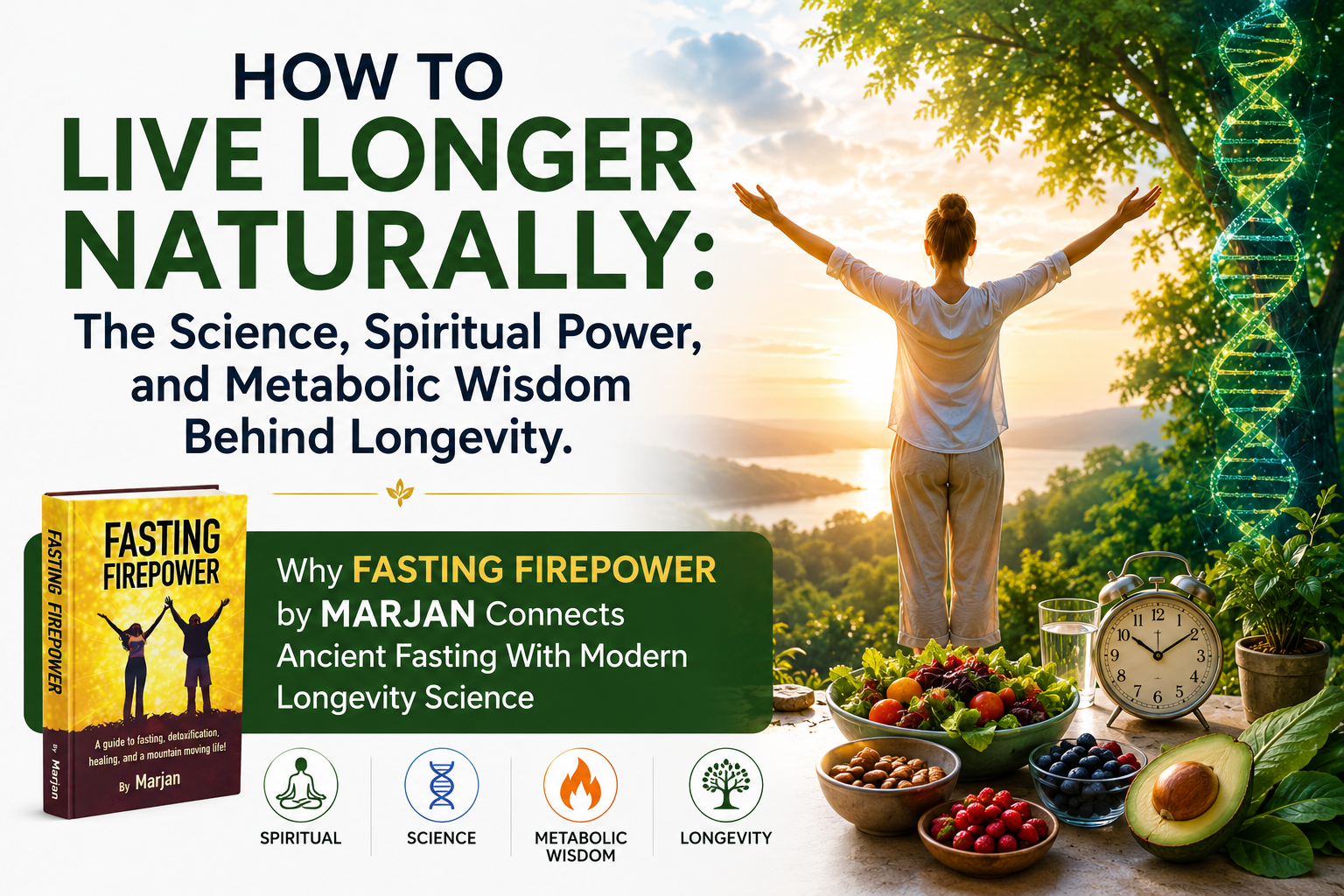
While scientists continue exploring the mechanisms behind longevity, one lesson remains remarkably clear: the most powerful health interventions are often the simplest—and the most sustainable. Read Fasting Firepower by Marjan for a complete guide to living a long and healthy life.