Swimming With the Shark of Sark: My Encounter with the World’s Most Notorious Con Man
“Give a man a gun, and he can rob a bank. Give a man a bank, and he can rob the world.” Philip Morrell Wilson
Some men rob banks. Some men own banks. And then there was Philip Morrell Wilson.
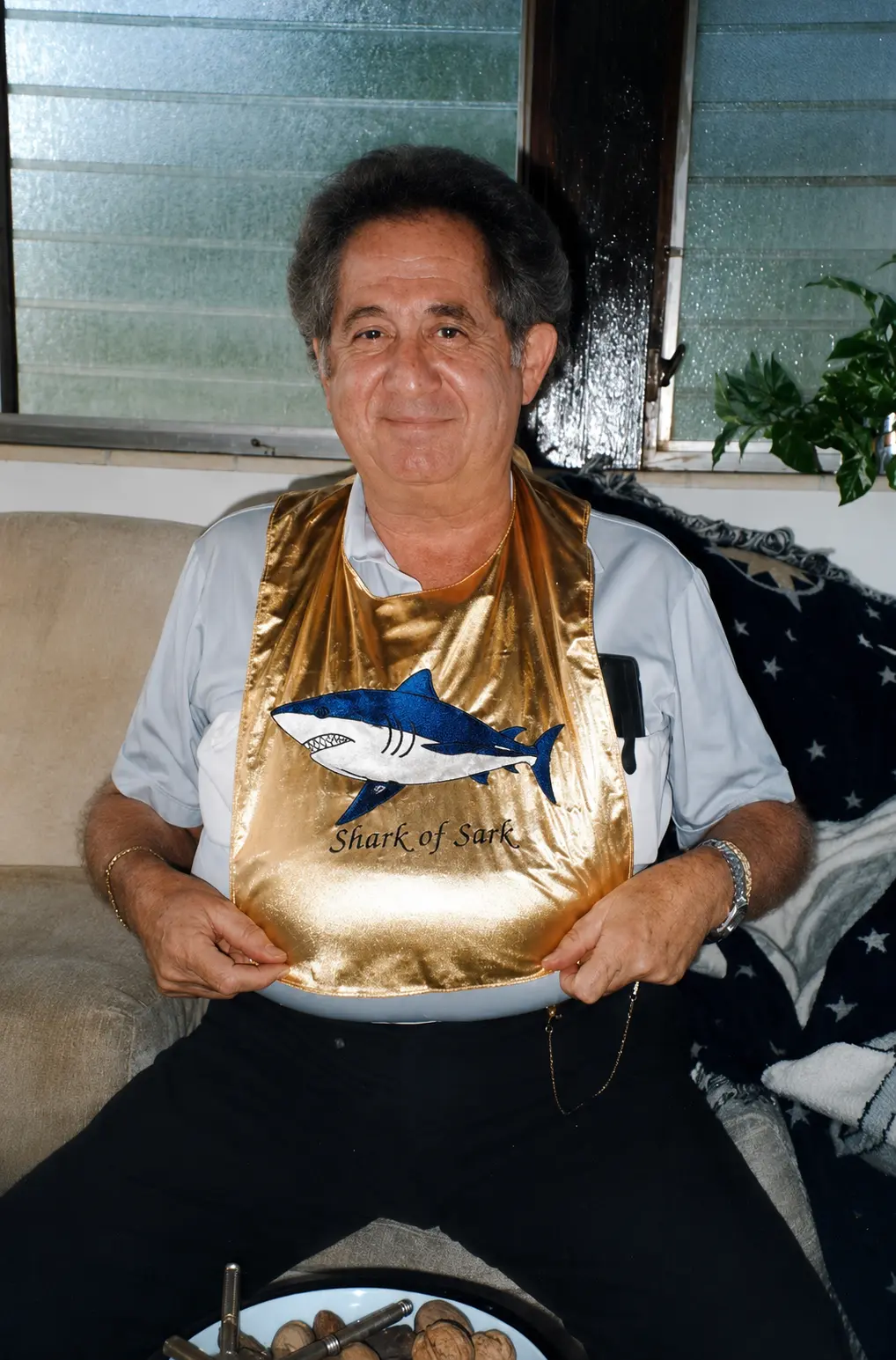
Long before I met him, Philip had become a legend in the world of international fraud. Federal investigators called him the Shark of Sark, a nickname that followed him around the globe like a shadow. By the time our paths crossed, he had been convicted of orchestrating one of the largest paper-fraud schemes in modern history.
The government claimed hundreds of millions of dollars had disappeared through a maze of shell corporations, bogus financial instruments, offshore accounts, and counterfeit banking documents. Investigators from multiple countries spent years trying to untangle the web.
Yet the man at the center of it all remained an enigma.
That is how I found myself driving toward a South Florida prison shortly after Hurricane Andrew, preparing to meet the man the FBI labeled the world’s greatest conman at the time.
The Assignment
Months earlier, I had been approached through channels connected to a shadowy Senate Subcommittee investigation I came to call “The Adjunct Arm”.
Their problem was simple. Nobody could get close to Philip Wilson. Bankers hated him. Law enforcement distrusted him. Former associates feared him.
Yet somewhere behind the mythology of the Shark of Sark remained unanswered questions, including the fate of enormous sums of missing money.
Government investigators believed that if anyone could establish a rapport with Wilson, it might be someone with firsthand experience navigating the world’s gray areas. Someone like me.
My role was simple. Get close. Listen. Learn. Find the money.
And above all, never forget that I was dealing with a man who had spent a lifetime successfully manipulating some of the world’s most powerful people.
Meeting the Shark
Nothing prepared me for Philip Wilson. He wasn’t physically imposing. He wasn’t particularly charismatic in the Hollywood sense. Yet within minutes of sitting across from him, it became obvious why so many intelligent people had fallen under his spell.
His mind moved like a chess master playing twenty games simultaneously. Questions became answers. Answers became diversions. Diversions became opportunities. The conversation flowed wherever Philip wanted it to flow.
He could be charming, arrogant, funny, hostile, insightful, and manipulative—all within the same sentence. Most people talk. Philip performed.
He viewed every conversation as a negotiation and every negotiation as a game.
One afternoon, after listening to him dismantle the motivations of nearly everyone he had ever encountered, he leaned back and said:
“Everyone irritates me, writer. Love irritates me. Bankers irritate me the most.”
That single sentence revealed more about Wilson than an entire psychological profile. He trusted nobody and regarded affection, loyalty, and business relationships as weaknesses to be exploited.
The Bank That Barely Existed

Wilson’s most famous creation was the Bank of Sark. The irony was that the bank wasn’t even located on the Island of Sark but next door, on the Island of Guernsey.
What appeared to the outside world as a legitimate international financial institution was little more than a carefully crafted illusion supported by confidence, paperwork, and perception.
Yet from this illusion emerged fraudulent drafts, certificates of deposit with gold-raised lettering, and letters of credit that circulated throughout the financial world.
The genius of the scheme wasn’t in the documents themselves. It was in Wilson’s understanding of human nature. He understood that greed often blinds people more effectively than deception.
People saw what they wanted to see. And Philip Wilson gave them exactly that.
At one point, I asked Phillip a simple question. You have untold millions stashed away. Why continue stealing?
Wilson’s answer revealed everything. “I don’t steal money in mere dribbles!”
Then, with a dismissive wave of his hand, he added: “What’s a few million going to do for me?”

It wasn’t really about money. Money was the scoreboard. The real addiction was the challenge. The conquest. The thrill of outsmarting millionaires and billionaires who considered themselves too sophisticated to be fooled.
Like many world-class swindlers, Wilson viewed himself less as a criminal and more as a superior strategist operating in a world populated by willing victims.
The Psychology of a Con Man
The most fascinating thing about Philip Wilson wasn’t necessarily his fraud. It was his philosophy. He genuinely believed that most people were driven by greed. Bankers. Politicians. Investors. Business people. Everyone wanted something.
According to Wilson, he merely understood their desires better than they did. In his mind, the world consisted of predators and prey. The shark happened to be honest about being a shark.
The Shark Hates the Shark
Ironically, Wilson despised the very nickname that made him famous. Sitting at dinner with him one evening, he launched into a tirade about journalists and authors who had written about him.
“People that never met me write about me, and they know absolutely nothing. They painted me to be the Jesse James of paper crime. In one article, I’m a beaver scurrying after money trees. They can’t even get the species right.”
He laughed.
“There’s a bit more or less to Philip Wilson than that. Give me a break, the Shark of Sark? But I’m glad it wasn’t a beaver. If I told the truth, most people wouldn’t believe it anyway. But a shark, now that’s something people can fantasize about.”
It was classic Philip. Even while criticizing the myth, he was helping create it.
Life Behind Bars

Prison had not humbled him. If anything, incarceration sharpened his contempt for authority. When I asked him about prison life, he responded with characteristic bluntness.
“I’ve been in this insensitive, mechanical rat-hole with total scumbags and half-wit degenerates for way too long. The intelligence quotient in here is barely imbecilic.”
Then he offered a strange prison lesson in survival.
“There are things you learn quickly in this hellhole, like never take a dump without first taking at least one leg out of your pants. If you get too nosy, you might lose your nose.”
Despite years behind bars, Wilson never spoke like a defeated man. He spoke like a businessman temporarily inconvenienced by circumstances.
The Missing Fortune
One question hung over every conversation. Where did the money go? Investigators believed hundreds of millions of dollars had flowed through Wilson’s various enterprises. A Justice Department official confided to me that the real amount was well over a billion. The Senate Subcommittee opted to keep that amount under wraps because Philip had scammed some of their own good old boys, and they didn’t want to be publicly embarrassed.
The Senators wanted answers. Banks wanted answers. Government agencies wanted answers. Former partners wanted answers. Wilson smiled whenever the subject arose. He never gave a direct answer. Perhaps that was the greatest con of all. The mystery itself became part of the legend.
The System Was the Real Criminal
Wilson never accepted responsibility as society expected. Instead, he saw himself as the victim of a system determined to make an example of him.
“If I ran a 7-Eleven, a gas station or a used car lot, I would be under investigation.”
Then he leaned forward and repeated his oft mentioned quote.
“This is like being in Judge Roy Bean’s courtroom—they arrest you in the morning, try you at noon and hang you at 2 o’clock.”
Whether one agreed with him or not, Wilson genuinely believed he had been singled out because the scale of his operation embarrassed powerful people in powerful institutions.
Redemption or Reinvention?
What struck me most was not Wilson’s intelligence. It was his inability to stop. Prison had taken his freedom but not his appetite. While other inmates counted days, Wilson studied law books, analyzed financial systems, and planned future ventures. He wasn’t interested in redemption. He was interested in getting back into his own personal monopoly game.
The Lesson of the Shark
Meeting Philip Morrell Wilson taught me something profound. Most people assume great frauds are built on lies. They are not. They are built on truth, expertly mixed with illusion.
The best con men understand human nature better than most psychologists. They know greed. They know fear. They know ambition. Most importantly, they know what people desperately want to believe. Philip Wilson built an empire on that understanding. The Bank of Sark eventually collapsed. The money vanished. The investigations ended. The headlines faded. But the lessons remain. Because every generation produces new sharks. And every generation produces a multitude of greedy fish willing to swim beside them.
And few sharks ever swam the waters of international finance with more audacity than Philip Morrell Wilson.
A Final Word: My Time with the Shark
For readers who want to know what Philip Morrell Wilson was really like beyond the headlines, the fuller story can be found in 600 Devils. During my three years of undercover work with Phil, I had the rare opportunity to get to know the man behind the legend. What began as observation gradually evolved into an unlikely friendship. We spent countless hours discussing money, crime, prison, power, and human nature.
As our friendship grew, Phil introduced me to influential figures in organized crime, including members of Mafia families and high-ranking leaders of major drug cartels. He spoke openly about the international money-laundering networks that moved vast sums through offshore financial havens and hidden banking channels. Whether every tale was entirely true was often difficult to know—Phil was one of history’s great con men—but many of the people he introduced me to were very real, offering a rare glimpse into a world few outsiders ever see. Needless to say, I became Washington’s darling.
What struck me most was that Phil rarely thought like a criminal. He viewed money as a game, governments as obstacles, and human greed as the one constant he could always count on. He could be cynical, hilarious, arrogant, insightful, and surprisingly philosophical—sometimes within the same conversation. The media painted him as the “Shark of Sark,” but the man I came to know was far more complex.
The chapters in 600 Devils reveal conversations and experiences unavailable anywhere else, providing an intimate look at one of the twentieth century’s most fascinating confidence men. They also tell the story of an unlikely friendship that led me into a shadowy world where bankers, smugglers, intelligence operatives, Mafia figures, and cartel leaders often crossed paths. Whatever label history places on Philip Morrell Wilson, his story remains one of the book’s most unusual and entertaining episodes—a rare glimpse behind the curtain of international finance, deception, and the larger-than-life characters who inhabit that world.