Why Consumer Activism Is the Most Powerful Force in Modern Democracy
The ballot box has long been considered the cornerstone of democratic participation. But elections happen every few years. Purchasing decisions happen every single day.
What if those daily decisions were as deliberate and coordinated as a vote? What if consumers collectively used their spending power the way citizens use their ballots to reward accountability and punish negligence?
That idea is no longer theoretical. It is already happening, and its impact is growing fast.
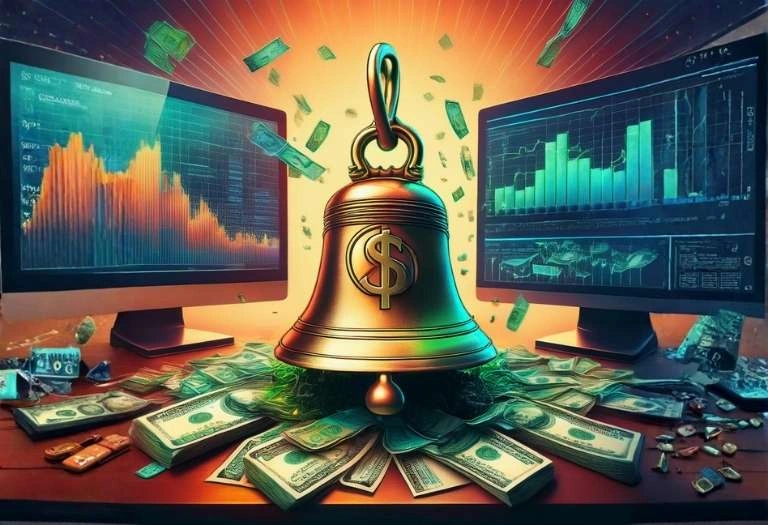
The Dollar Bell: A New Symbol of Consumer Power
Everyone recognizes the Liberty Bell as a symbol of freedom. The ballot box represents civic participation. But in an economy where corporate influence shapes political outcomes as much as any election, a third symbol may be overdue.
Call it the Dollar Bell.
The concept is straightforward. When a company or politician acts in alignment with public values, consumers reward them with their spending. When they do not, consumers withdraw it. Each purchase or deliberate non-purchase sends a signal. Enough signals, coordinated at scale, become a force no boardroom can ignore.
Purchasing activism does not replace voting. It extends to every transaction, every grocery run, every subscription renewal, every brand choice at checkout.
Why Individual Spending Decisions Are Not Enough on Their Own
One person redirecting their wallet changes nothing at the corporate level. Large companies can absorb individual boycotts without noticing. The wealthy can easily offset isolated consumer choices.
The power of wallet voting is entirely dependent on scale.
When a movement resonates with the masses, the math changes completely. Companies that generate hundreds of millions in revenue can still be shaken when a coordinated, sustained shift in consumer behavior hits a critical threshold. Recent years have demonstrated this clearly.
Budweiser, Starbucks, and Coca-Cola each faced significant consumer backlash over specific decisions or associations. The financial and reputational consequences were real, measurable, and swift. None of those outcomes required legislation, petitions, or waiting for an election cycle. They required enough people to make aligned choices at the point of purchase.
History Shows That Boycotts Work
Consumer activism is not a new invention. Its track record spans centuries.
In 1791, British abolitionists launched one of the earliest recorded consumer boycotts. After Parliament refused to abolish slavery in sugar plantations, activists distributed thousands of pamphlets urging the public to stop buying slave-produced sugar. Sales dropped by as much as 50%. Public pressure did what political debate had failed to do.
Decades later, the threat of an international boycott against Apartheid-era South Africa was enough to push the diamond industry toward addressing human rights abuses, before any formal boycott had even fully taken hold. The credible threat alone produced movement.
These examples predate the internet, social media, and the smartphone. They were coordinated through pamphlets and word of mouth. The infrastructure available today makes those efforts look rudimentary by comparison.
The Information Age Has Changed Everything
Every person now carries a device capable of instant research, real-time communication, and coordinated action. Consumers can look up a company’s political donations, environmental record, labor practices, or executive conduct within seconds of standing in front of a store shelf.
That capability is already influencing behavior at scale. According to a LendingTree survey, roughly a quarter of Americans report actively boycotting a product or company they previously purchased. Motivations vary by political alignment, social issues, and environmental concerns, but the pattern remains consistent. People are no longer separating their values from their spending.
A savvy investor or entrepreneur who recognizes this trend and builds the right infrastructure around it could shape the next era of consumer influence.
The Missing Infrastructure: A Centralized Wallet-Voting Platform
The tools for mass consumer coordination exist. What does not yet exist in a meaningful way is a centralized, nonpartisan platform purpose-built for purchasing activism.
Imagine an easy-to-use website or app that aggregates corporate behavior data, tracks political contributions, monitors environmental and labor records, and allows consumers to make informed, values-aligned decisions in real time. Not a partisan tool pushing a single agenda, but a transparent platform that lets users define their own principles and find companies that match or violate them.
The influence such a platform could generate would be significant. Politicians cannot get elected without financial support. Companies fund political campaigns and lobbying efforts. A sustained, coordinated shift in consumer spending toward or away from specific companies directly affects the financial pipeline that keeps certain politicians in office.
Less revenue for companies acting against the public interest means less political funding for the representatives those companies support. The connection is direct.
Corporate Power Has Already Figured This Out
It is worth noting that coordinated financial pressure is not a new concept at the institutional level. It is standard practice.
BlackRock, the world’s largest institutional investor managing trillions in assets, has publicly stated it would decline business with companies that fail to articulate clear positions on environmental and social issues. That is financial coercion from the top, applied at a scale that shapes corporate behavior across entire industries.
Political action committees exist precisely to concentrate financial influence and direct it toward outcomes that benefit shareholders and institutional interests. This machinery has been running for decades.
Consumers have something that institutions do not: numbers. There are hundreds of millions more everyday consumers than there are institutional shareholders. The coordination problem is the only thing standing between that latent power and real-world impact.
An accessible, well-designed platform could solve that coordination problem. The group or individual that builds it first will have a significant advantage. History rewards early movers in spaces like this — as Burger King learned when it consistently outpaced slower competitors by reading consumer sentiment before others acted on it.
What Voting With Your Wallet Looks Like in Practice
Consumer activism does not require dramatic gestures. It works through consistent, informed, cumulative choices.
Some practical ways to participate:
Research before you spend. Tools like the Good On You brand directory rate fashion brands on ethical and environmental performance. Similar resources exist across food, technology, and household goods.
Support transparent companies. Businesses that publicly disclose their supply chain practices, labor conditions, and political contributions are making themselves accountable. Rewarding that transparency encourages more of it.
Use your voice alongside your wallet. Consumer reviews, social media, and direct feedback to companies amplify the signal your spending sends. Companies closely track public sentiment, and visible consumer dissatisfaction accelerates change.
Stay consistent. One-time boycotts fade. Sustained behavior changes produce lasting results.
FAQs About Voting With Your Wallet
Does boycotting actually work?
Yes, when it reaches a sufficient scale. Isolated individual decisions have minimal effect. Coordinated mass participation — particularly when publicly visible — consistently produces measurable corporate and political responses, as historical and recent examples confirm.
Is wallet voting partisan?
It does not have to be. Consumer activism crosses political lines. People across the political spectrum have participated in boycotts for reasons ranging from environmental concerns to cultural grievances. A nonpartisan platform would allow each user to define their own values rather than being handed someone else’s agenda.
What companies have been most affected by consumer boycotts recently?
Budweiser, Starbucks, Target, and Coca-Cola have all experienced notable consumer-driven revenue impacts in recent years following decisions that drew significant public backlash from various segments of their customer base.
How do I find out which companies donate to which politicians?
OpenSecrets.org is a comprehensive, nonpartisan resource for tracking political donations, lobbying activity, and the financial connections between corporations and elected officials.
Can small purchases really make a difference?
Individually, no. Collectively, yes. The mechanism is cumulative, not individual. The goal is not for one person to change a company’s behavior. It is enough for people to act in alignment for the aggregate shift to become financially significant.
Conclusion
The ballot box matters. But so does the register receipt.
Democratic participation does not begin and end at the polling booth. In a market-driven economy, where corporate money shapes political outcomes and institutional investors already use financial pressure as a policy tool, consumer spending is a form of civic power that most people have not fully exercised.
The infrastructure to coordinate that power at scale is not yet fully built. But the awareness, the technology, and the demonstrated willingness are all already present. Someone is going to build the Dollar Bell in a meaningful way. When they do, the rules of both commerce and politics will shift.
The question is not whether voting with your wallet matters. It is whether enough people will act on it together, and whether someone will build the platform that makes coordination easy.
For more perspectives on consumer empowerment, economic accountability, and conscious living, visit www.marjanbooks.com — home to additional articles and videos by Marjan, author of 600 Devils and Fasting Firepower.