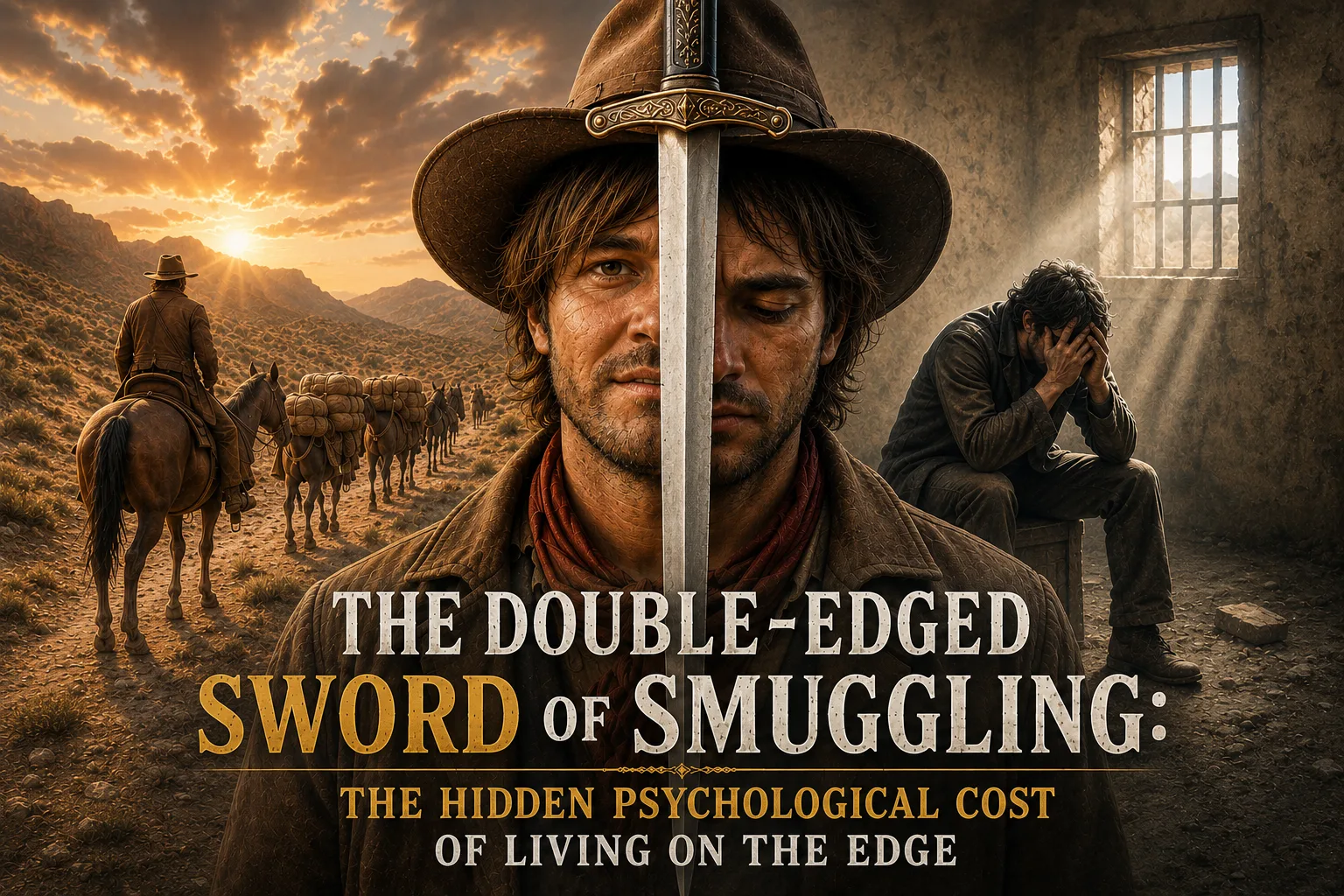

A refugee son. A cannabis smuggler. An undercover operative. A grandfather of eighteen. How does a man like that finally decide to tell the truth, and why does it take 45 years?
If you’ve come across 600 Devils and found yourself wondering what compelled a man to crack open four and a half decades of secrecy, you’re asking exactly the right question. The “why” behind this memoir is as layered and honest as the book itself. It’s not a story of someone cashing in on a dramatic past. It’s a story of a man who simply ran out of ways to carry the weight alone.
This article goes deeper than most coverage of 600 Devils beyond the plot summary, beyond the drug runs and the jungles, and the senatorial chambers, and into the real human forces that drove Marjan to write it.
Who Is Marjan, and Why Should You Care?
Before we can understand why he wrote the memoir, it helps to understand who wrote it.
Marjan was born in 1949 in a refugee camp in Austria, the son of Slovenian parents who fled after communist forces seized their family farm in the aftermath of World War II. They eventually settled in Wisconsin, carrying with them the kind of inherited trauma that rarely gets spoken aloud at the dinner table.
From those beginnings, Marjan’s life took turns that most people only encounter in fiction. He went from a Midwestern upbringing to the shadowy corridors of international cannabis smuggling, traveling from Mexico to Thailand, moving through drug lords, conmen, corrupt politicians, and hillside tribes in Burma’s Shan State. He rose from a low-level pot dealer to a trusted aide for one of the world’s most sophisticated smuggling operations, and eventually became an undercover operative for what he describes as an “adjunct arm” of the U.S. government.
Then, more than forty years ago, he walked away from all of it. He moved his wife and five children into the Montana wilderness, grew his own food, co-founded and sold multiple businesses, and lived what most people would call a quiet life.
Until he wrote 600 Devils.
Kirkus Reviews described it as “a detailed family saga wrapped up in a thoughtful and sometimes-shocking personal narrative”, a rare book where provocative philosophizing sits alongside visceral crime storytelling.
The Real Reasons Marjan Wrote 600 Devils
Most memoirs have a surface reason and a real one. With 600 Devils, there are several and each one is worth understanding on its own terms.
1. Memory Was Starting to Scatter
Time doesn’t preserve experience. It distorts, compresses, and rearranges it. For Marjan, a life spanning multiple continents, identities, and moral universes doesn’t neatly reduce to dinner-table anecdotes. Writing the memoir became an act of excavation, not nostalgia, but deliberate reconstruction. A way to place events in their true sequence before the gaps widened any further.
2. The Cost of Forty Years of Silence
For over four decades, the majority of Marjan’s past was unspoken. That kind of sustained silence carries weight. It doesn’t simply protect, it compresses, reshaping experience from the inside. Writing became a release valve. A way to let buried things come to the surface, where they could finally be examined in the open.
This is well-documented in memoir psychology. As researchers have found, writing about personal narrative can lead to self-realization and a genuine sense of empowerment precisely because it moves feelings from inside the writer onto the page, functioning much like a therapeutic process.
3. Emotional Accounting That Couldn’t Be Avoided
A life shaped by risk, smuggling, moral compromise, and survival doesn’t just leave memories; it leaves residue. Regret. Confusion. Unanswered questions that refuse to dissolve with time. On paper, those things cannot hide. The structure of a memoir forces confrontation. Not as a passing thought, but as something that has to be built, organized, and faced directly.
4. Understanding Over Justification
This is perhaps the most important distinction in the entire memoir: Marjan wasn’t writing to make himself look better. He was writing to see clearly. There’s a significant difference between softening the past and exposing it. 600 Devils does the latter. Reviewers consistently note the book’s unflinching honesty, its refusal to recast an outlaw’s life as something more acceptable than it was.
5. A Fractured Identity That Needed to Be Made Whole
When a single life contains the roles of refugee child, outlaw, international smuggler, undercover operative, husband, father, entrepreneur, and spiritual seeker, how does a person know which version is real? The memoir didn’t resolve those contradictions by erasing them. It held them together. It treated each identity not as a fracture, but as a chapter. Because as Marjan came to understand, redemption isn’t the deletion of who you were, it’s the reclaiming of it.
6. The Search for Peace
Writing 600 Devils forced Marjan to revisit moments he might have preferred to leave buried. But something unexpected happened in the process: confrontation led to calm. Reflection led to forgiveness of others, and more significantly, of himself. That is not a small outcome for a man who spent decades navigating one of the world’s most dangerous industries.
7. A Legacy for Eighteen Grandchildren
This is the quietest and perhaps most moving reason of all. Marjan has eighteen grandchildren. A handful of stories at the dinner table won’t carry the weight of a life like his — won’t explain the turns, the missteps, the consequences, the moments of genuine reckoning, or the slow path back. What’s needed is the whole road, unvarnished. 600 Devils is that road, written down so that the people who come after him can understand not just where things ended up, but how they got there.
8. The Philosophical Questions That Never Got Resolved
Running through the entire memoir is a thread of genuine philosophical inquiry about fate, faith, free will, and the nature of reality. These aren’t decorative questions. They animated Marjan’s life and shaped his decisions. The memoir became a place to wrestle with them honestly, in public, without the comfort of tidy answers.
What Makes 600 Devils Different From Other Crime Memoirs
The true crime genre has no shortage of outlaw narratives. What separates 600 Devils from the pack isn’t the danger, it’s the interiority.
Where most crime memoirs trade in adrenaline and bravado, 600 Devils trades in conscience. Marjan is not a man who looks back on his criminal years with pride or nostalgia. He’s a man who spent forty-five years asking hard questions about what he did, why he did it, and what it cost himself, his family, and the people around him.
Readers and critics have noticed. The Online Book Club’s official reviews awarded it a rare perfect five out of five stars, with one reviewer writing that the book “entertains, educates and inspires” and praising Marjan’s portrait as “an intriguing story of an outlaw with a spiritual consciousness.” Another reviewer at Online Book Club noted that the memoir’s sobering questions about human existence, life, death, aging, and God resonated deeply and personally.
Literary Titan called it a “profoundly interesting memoir” where readers find themselves “lost in the tales, ingenious writing techniques.”
Paige Bennett, a book reviewer and Drake University alumnus, described it this way: the memoir weaves smuggling adventures with memories of family and their harrowing post-WWII experiences, invoking “feelings of terror, despair, hope and pride” for characters who feel like people you actually know.
The Structure of the Book: How Marjan Tells His Story
600 Devils is not a linear march from birth to redemption. It moves sometimes abruptly across time, geography, and emotional register. Marjan weaves between his family’s WWII refugee story, his own coming-of-age in Wisconsin, and his years in the criminal underground. The effect is deliberate: life doesn’t unfold in a straight line, and neither does the memoir.
The book opens with Marjan’s birth in a refugee camp, then pulls back to trace his family’s loss of their Slovenian farm under the new communist regime. From there it moves into Marjan’s own story, the introduction to cannabis dealing through a friend named Alberto, the encounter with a man named Mario, who his uncle had once saved from fascist soldiers, the invitation to Thailand, and the decades that followed.
Structurally, this back-and-forth, Kirkus noted, occasionally creates confusion due to a lack of transitional cues, but the overall effect is one of genuine authenticity. After all, this is how memory actually works—it rarely files itself neatly by date or chronology. In many ways, the timeline is constructed much like The Godfather Part 2, beginning at one critical juncture before moving backward through time in fragments that gradually illuminate the larger story. What first appears disjointed eventually reveals itself as intentional, with each return to the past adding context, emotional weight, and explanation until the full picture finally comes into focus.
What Readers Are Saying
The response to 600 Devils has been consistently strong across reading communities.
On Goodreads, readers describe the memoir as genuinely difficult to put down, a book that earns its intensity through honesty rather than exaggeration.
The audiobook version, narrated by Dustin Pete and available on Audible, has drawn particular praise for the narrator’s ability to complement the story’s tonal range, shifting between high-stakes tension and quiet philosophical reflection without losing the thread.
Multiple reviewers across platforms have described the memoir as “ready-made for a miniseries”, a testament to how cinematic the storytelling feels, even while rooted in real events.
Jennifer Maude, a reviewer from Auckland, New Zealand, described it as “a mind-blowing piece of writing that has more twists and turns than the Stelvio Pass.” Dr. A. Wonnacott described the journey as one that “spans decades, continents, war-torn lands and covert government operations.”
The Deeper Truth: Why This Memoir Matters Beyond Marjan
Good memoirs don’t just document one life, they illuminate something universal. 600 Devils does this by treating its central questions about identity, redemption, moral compromise, and the human hunger for meaning as questions the reader can participate in, not just observe.
Marjan’s experience of being born stateless, growing up between cultures, and never quite fitting into the conventional world is more common than it might appear. His gravitational pull toward outlaw life wasn’t simply recklessness; it was an expression of a deeper disconnection from the mainstream that many readers recognize in themselves.
And his eventual turn toward peace, not through dramatic religious conversion, but through the slow accumulation of self-awareness, models a kind of redemption that feels genuinely achievable. Not a lightning-bolt transformation. Something more like dawn: slow, almost unnoticed, until the darkness is simply no longer the dominant condition.
Where to Find 600 Devils
- Buy the book or Kindle edition on Amazon.
- Listen to the audiobook on Audible.
- Follow Marjan on YouTube for author updates and discussions.
- Connect on Facebook at the 600 Devils page.
- Read the Kirkus Review at kirkusreviews.com.
FAQ: Questions People Ask About 600 Devils and Marjan
Q: Is 600 Devils a true story? Yes. 600 Devils is a memoir, a firsthand account of Marjan’s actual life, including his upbringing as the son of Slovenian refugees, his years in international cannabis smuggling, and his eventual path toward redemption. Some sections are reconstructed from memory or family accounts, which Marjan acknowledges openly in the text.
Q: Why did Marjan wait 45 years to write the book? Marjan spent decades living a quiet life in Montana after walking away from the criminal world. The decision to write was driven by a combination of factors: the weight of sustained silence, the desire to leave an honest account for his eighteen grandchildren, and the need to finally make sense of a fragmented past.
Q: Is 600 Devils appropriate for readers who don’t normally read true crime? Yes, many readers who don’t typically gravitate toward true crime have found 600 Devils compelling precisely because it’s as much a philosophical and spiritual memoir as it is a crime narrative. If you’ve ever thought seriously about questions of faith, identity, or what it means to start over, the book will resonate.
Q: What genre does 600 Devils fall into? The memoir sits at the intersection of true crime, family saga, and spiritual memoir. It has been compared to a Hollywood thriller in terms of pacing, while also functioning as a genuine philosophical inquiry into existence, morality, and redemption.
Q: Is there an audiobook version of 600 Devils? Yes. The audiobook is available on Audible, narrated by Dustin Pete. Reviewers have praised the narration as an excellent match for the book’s tone, engaging, grounded, and capable of handling both the high-stakes crime sequences and the quieter reflective moments.
Q: What awards or recognition has 600 Devils received? The book was a finalist for the 2023 International Book Awards. It received an official review from Kirkus Reviews and multiple five-star reviews from the Online Book Club’s professional review team.
Q: Who would enjoy 600 Devils the most? The book appeals to readers interested in true crime with substance, memoirs about identity and transformation, stories rooted in immigrant and refugee experience, and narratives that wrestle honestly with questions of faith and meaning. It has drawn praise from readers across multiple countries and reading communities.