
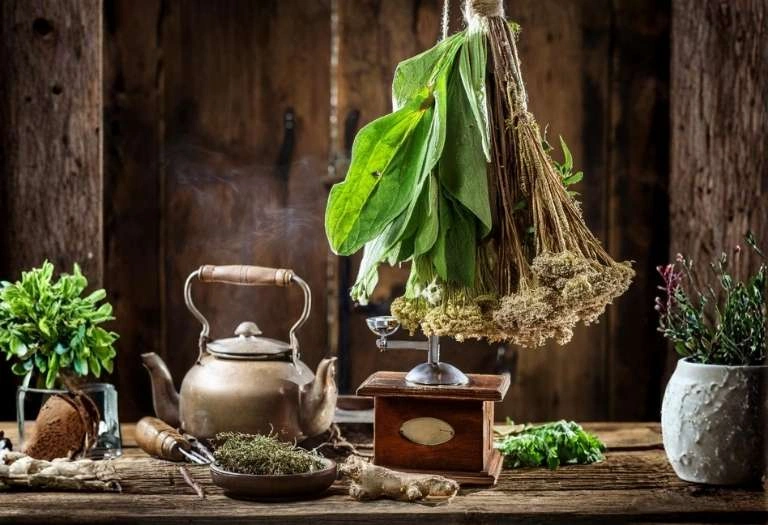
Essiac Tea: Benefits, Ingredients, How to Make It, and What You Should Know
Essiac tea has quietly held its ground in the world of natural health for nearly a century. It is not a trendy wellness product. It is a four-herb formula with roots in Indigenous medicine, carried forward by a Canadian nurse who spent decades advocating for it — often against fierce institutional resistance.
If you are researching Essiac tea for the first time, or looking for a reliable guide that goes beyond surface-level coverage, this is it. You will find a breakdown of the ingredients, their individual properties, how to prepare the tea correctly, what realistic benefits to expect, and what precautions to take before you start.
What Is Essiac Tea?
Essiac tea is an herbal blend composed of four primary ingredients: Burdock Root, Sheep Sorrel, Slippery Elm Bark, and Indian Rhubarb Root. It is brewed as tea and has long been associated with immune support, detoxification, and anti-inflammatory effects.
The name comes from Rene Caisse, a Canadian nurse who received the formula from an Ontario Ojibwa medicine man in the 1920s. “Essiac” is simply her last name spelled backward. Caisse spent much of her career administering the formula to patients and defending its use, making her one of the most well-known figures in 20th-century herbal medicine.
The Four Ingredients in Essiac Tea
Each herb in the Essiac formula plays a distinct role. Understanding what each one does helps you evaluate the formula on its own terms, rather than accepting it blindly.
Burdock Root
Burdock Root supports blood circulation, helps stabilize blood sugar levels, and has traditionally been used to improve skin texture. It is also rich in inulin, a prebiotic fiber that supports gut health. Research published in the International Journal of Molecular Sciences has highlighted the antioxidant and anti-inflammatory compounds of its properties, including quercetin and luteolin.
Sheep Sorrel
Sheep Sorrel is the ingredient most often associated with Essiac’s reputation as an anti-cancer herb. It contains potent antiviral properties and a high concentration of organic acids and flavonoids. Some researchers believe it is the most therapeutically active plant in the formula, though definitive clinical trials are still lacking.
Slippery Elm Bark
Slippery Elm is a mucilaginous herb, meaning it produces a gel-like substance when mixed with water. This makes it particularly useful for soothing inflamed mucous membranes. It has a documented history of use for conditions like inflammatory bowel disease, sore throat, and chronic coughs. It is also rich in antioxidants that help neutralize free radicals.
Indian Rhubarb Root
Indian Rhubarb Root is high in antioxidants and contains compounds with potential liver-protective properties. Laboratory studies have shown it may inhibit liver cancer cell growth in rats at high concentrations, though those dosage levels have not been validated for human use. It also acts as a gentle digestive stimulant, supporting the elimination of waste through the intestines.
Potential Benefits of Essiac Tea
The honest answer is that Essiac tea’s benefits are supported by a mix of historical use, anecdotal evidence, and limited laboratory research — not large-scale clinical trials. That does not make it worthless, but it does mean you should approach it with realistic expectations.
Immune System Support
All four herbs in Essiac carry antioxidant properties. Antioxidants reduce oxidative stress, which is directly linked to immune system impairment. Regular use of the formula may help the body maintain a stronger baseline immune response.
Detoxification
Essiac tea increases urination in most people who take it consistently. This diuretic effect helps the kidneys flush out waste products. The formula also stimulates digestion, aiding in the elimination of toxins through the gut.
Anti-Inflammatory Effects
Chronic inflammation is an underlying factor in many serious diseases, including heart disease, diabetes, and autoimmune conditions. The herbs in Essiac — particularly Burdock Root and Slippery Elm — have documented anti-inflammatory activity that may offer measurable benefit with consistent use.
Anti-Cancer Research: What the Evidence Actually Shows
Each of the four herbs in Essiac has demonstrated DNA-protective activity and antioxidant properties in laboratory settings — characteristics common to natural anti-cancer compounds. Anti-cancer activity has been demonstrated in vitro (in test tubes). However, its effects in vivo (in living organisms) remain inconclusive.
There are no large-scale, peer-reviewed human clinical trials that confirm Essiac tea cures or treats cancer. Anyone claiming otherwise is overstating the evidence. What can be said responsibly is that the formula’s individual ingredients each contain compounds that researchers continue to investigate for their cancer-relevant properties.
If you are dealing with a cancer diagnosis, Essiac tea should be discussed openly with your oncologist or a qualified integrative medicine practitioner before use. Organizations like the Society for Integrative Oncology provide guidance on combining conventional and complementary approaches.
How to Make Essiac Tea at Home
Getting the preparation right matters. The ratio of herbs is specific, and the brewing process affects both potency and shelf life.
The Base Herbal Mix
Combine the following and store in an airtight container:
- 680 grams of cut Burdock Root
- 454 grams of powdered Sheep Sorrel
- 113 grams of Slippery Elm Bark
- 28 grams of powdered Indian Rhubarb Root
Mix thoroughly before sealing. Keep in a cool, dry location away from direct sunlight.
Water and Tea Ratios
For one gallon: Use 1 gallon of fresh spring or distilled water with 16 tablespoons (8 oz.) of the Essiac blend.
For one quart: Use 1 quart of spring or distilled water with 4 tablespoons (2 oz.) of the blend.
Avoid using tap water. Chlorine and fluoride in municipal water can interfere with the herbal compounds.
Brewing Instructions
- Bring the measured water to a full boil.
- Stir in the tea mixture and cover the pot.
- Reduce heat and simmer for 10 minutes.
- Remove from heat and stir again. Cover and refrigerate for 12 hours.
- Return the pot to heat, bring back to a boil, and simmer for another 10 minutes.
- Strain the liquid through a fine mesh strainer.
- Funnel the strained tea into clean, sealed glass bottles.
- Tighten caps once the liquid has cooled.
When stored properly in the refrigerator, Essiac tea stays fresh for 2 to 3 weeks.
Where to Source the Herbs
Quality matters significantly with herbal formulas. Fresh, organic herbs from a credible supplier produce a more potent result than stale, low-grade blends. Pre-mixed Essiac tea in correct proportions is available through established botanical suppliers such as Starwest Botanicals, which is a reliable starting point for sourcing.
How to Take Essiac Tea
There is no universally prescribed dosage, but a commonly followed protocol involves drinking two to three 8-ounce glasses per day for three consecutive days, used for detoxification, immune support, and mental clarity. Many people repeat this cycle monthly rather than taking it daily year-round.
Start with a smaller amount to assess your tolerance, particularly if your system is sensitive or you are in the early stages of detoxification.
Side Effects and Precautions
Essiac tea is potent. It should not be treated as a casual everyday beverage without awareness of how it works.
Possible side effects include:
- Nausea and vomiting, particularly in early use. This may be a sign of rapid toxin release rather than a reaction to the herbs themselves.
- Increased urination.
- Loose stools, depending on individual sensitivity to Indian Rhubarb Root.
Who should avoid Essiac tea:
- Pregnant women should not use Essiac tea. Several herbs in the formula have traditionally been avoided during pregnancy due to their stimulating effects on the digestive and urinary systems.
- Individuals on blood thinners or immunosuppressant drugs should consult a physician before use, as some herbs in the formula may interact with medications.
- People with kidney disease should use caution, given the diuretic effect.
Essiac tea also contains measurable amounts of calories, proteins, fats, carbohydrates, and fiber, along with natural sugars and trace amounts of potassium, vitamin A, and vitamin C. It is not calorie-free.
If you are unsure whether Essiac is appropriate for your situation, consult an experienced integrative or holistic practitioner. The American Herbalists Guild maintains a directory of credentialed herbal practitioners if you need help finding one.
A Note on Regulation and Institutional Position
The FDA has not evaluated Essiac tea and does not recognize clinical evidence supporting its therapeutic claims. That is an important fact to acknowledge transparently.
It is also worth noting that herbal formulas cannot be patented. This means pharmaceutical companies have no financial incentive to fund the large-scale trials that would generate the kind of evidence regulatory bodies require. That structural reality affects what research exists, not necessarily what is therapeutically possible. The absence of regulatory approval is not the same as proof of ineffectiveness.
The responsible approach is to use Essiac tea as a complementary practice, not as a replacement for diagnosed medical care.
FAQs About Essiac Tea
Does Essiac tea actually work?
The four herbs in Essiac each have documented antioxidant, anti-inflammatory, and immune-supportive properties. Many people report significant benefits from consistent use. However, controlled clinical trials in humans are limited, so the evidence base is not equivalent to pharmaceutical-grade research.
How long does it take to see results from Essiac tea?
Most people who report benefits notice changes after 2 to 4 weeks of consistent use. Effects such as increased energy, improved digestion, and reduced inflammation are commonly cited. Results vary depending on individual health status and toxicity levels.
Can I take Essiac tea every day?
Some practitioners recommend cycling it three days on, then a break, rather than continuous daily use. Long-term, uninterrupted use without monitoring is not advised.
Is Essiac tea safe to use alongside conventional cancer treatment?
This must be discussed with your oncologist. Some herbal compounds can interact with chemotherapy drugs or affect their metabolism. Do not add Essiac or any herbal formula to a cancer treatment plan without medical consultation.
Where can I buy ready-made Essiac tea?
Pre-mixed Essiac herb blends in the correct proportions are available from botanical suppliers. Starwest Botanicals is one well-regarded option. Always choose certified organic products from transparent suppliers.
Can Essiac tea be stored at room temperature?
No. Once brewed, it must be refrigerated in sealed glass bottles. It will keep for two to three weeks under refrigeration. Unbrewed dry herb blends can be stored in a cool, airtight container.
Final Thoughts
Essiac tea is not a miracle cure. It is also not a fringe remedy with no backing. It is a century-old herbal formula based on four well-studied plants, each with meaningful contributions to immune health, detoxification, and the management of inflammation.
Used with realistic expectations, proper preparation, and appropriate precautions, it can be a genuinely useful part of a broader approach to preventive health and detoxification.
Herbs do not heal on their own. What a well-prepared herbal formula can do is give the body better conditions in which to heal itself. Essiac tea, when used correctly, is one practical way to support that process.