How Processed Foods Are Making Americans Sick (And What the FDA Is Not Telling You)
Americans spend more on healthcare than any other nation on Earth, yet, according to Forbes Health, the United States ranks last in overall health outcomes among developed countries. That contradiction is not an accident. It points to something systemic, something woven into the food most people eat every single day.
This article breaks down the relationship between processed foods, chronic disease, and the regulatory failures that have allowed this crisis to grow largely unchecked.
The Nutrition Gap in Modern Medicine
Doctors are trained to diagnose and treat, not to prevent. According to research by the Harvard Law School Food Law and Policy Clinic, less than 1% of medical school lecture hours cover nutrition. Preventive care receives even less attention.
The result is a healthcare system built around managing illness rather than stopping it from developing in the first place. Patients leave appointments with prescriptions, not dietary guidance. Meanwhile, nine out of ten seniors in the United States are on prescription drugs.
What Processed Foods Are Doing to the American Body
The Scale of the Problem
Processed foods now make up the bulk of the American diet. According to Harvard’s T.H. Chan School of Public Health, this dietary pattern is among the leading drivers of chronic disease in the country. Globally, processed foods account for 25 – 60% of a person’s daily energy intake.
The consequences are measurable. One large study involving 100,000 adults found that a 10 percent increase in processed food consumption was associated with a greater than 10 percent increase in the risk of cardiovascular disease and coronary heart disease. A separate study of 20,000 adults eating more than four servings of processed food daily showed that each additional serving was linked to a notable rise in obesity rate, and an 18% increase in mortality risk.
What Is Actually in Processed Foods
Processed foods are engineered to be convenient, cheap, and palatable. What they are not engineered to be is nutritious.
Compared to whole foods, they are typically lower in dietary fiber and vitamins, and higher in sugar, sodium, refined carbohydrates, and trans fats. Many also contain dyes, preservatives, artificial flavorings, waxes, and pesticide residues.
More than 30 countries have banned specific American food products due to ingredients considered unsafe under their regulatory standards. Products in this category include items as familiar as breakfast cereals, packaged crackers, flavored beverages, and cooking oils. The National Institutes of Health has noted that corn commonly treated with the herbicide atrazine is linked to birth defects, and atrazine is banned in 44 countries.
According to available testing data, approximately 90% of commercial fruits and vegetables in the United States test positive for residues from two or more of the more than 100 pesticides currently in use.
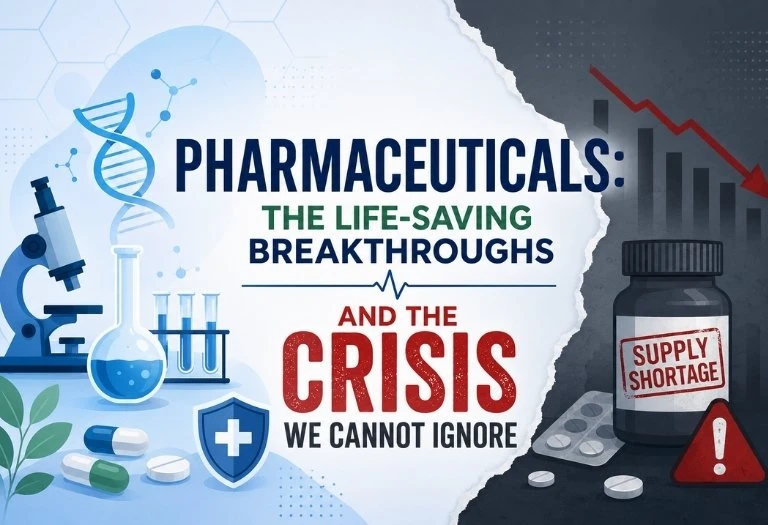
The FDA: Public Health Protector or Industry Partner?
A Revolving Door Problem
The agency responsible for approving the food Americans eat, and the drugs they take, is the Food and Drug Administration. But the FDA’s independence has been questioned for years, and with good reason.
An NPR investigation found that more than 25 percent of FDA employees who approved cancer and hematology drugs between 2001 and 2010 subsequently left the agency to work for or consult with pharmaceutical companies. Former executives from large pharmaceutical and food corporations routinely move into senior FDA positions, and vice versa.
This revolving door has real consequences for the decisions the FDA makes and for the products it approves.
Funding That Creates Conflicts
The FDA has shifted from being an entirely taxpayer-funded agency to one that now receives nearly 50 percent of its budget from user fees paid by the companies seeking product approvals. The companies paying these fees are the same companies whose products the FDA is supposed to evaluate objectively.
Science Advisor tracked 107 FDA advisors and found that 62 percent had received payments from related pharmaceutical companies. Among those, 25 percent received over $100,000, and 6 percent received over $1 million. When advisory panels can be influenced this way, the appearance of medical consensus becomes difficult to trust at face value.
Approved Despite Opposition
These conflicts have produced decisions that are difficult to explain on scientific grounds alone. The FDA approved carcinogenic artificial sweeteners, including saccharin, aspartame, and sucralose, while simultaneously blocking the natural herb stevia from being marketed as a sweetener, citing concerns that later appeared closely tied to protecting industry profit margins.
In a widely reported case, a clinical trial for an Alzheimer’s drug was approved following what critics described as a flawed study. The FDA’s advisory panel voted 10 to 0 against approval. The FDA approved the drug regardless, leading three committee members to resign in protest.
According to the Mises Institute, major pharmaceutical companies, including Pfizer and Johnson & Johnson have pleaded guilty to misbranding with intent to defraud and paying kickbacks to healthcare providers to increase prescriptions. Both companies were fined billions of dollars and later settled additional lawsuits related to manipulating studies and suppressing negative research findings.
What Happens When People Stop Eating Processed Foods
Studies of traditional societies that have not adopted processed food diets consistently show lower rates of the chronic diseases that affect Western populations. When outside influences bring processed foods into those communities, and when traditional diets are replaced, disease rates rise proportionally.
This pattern appears across different regions and cultures. It suggests that the diseases considered common in modern life are not inevitable. They are, in large part, dietary.
The Case for Eating Naturally
The human body is composed of natural elements. Every cell depends on water, oxygen, minerals, and compounds sourced from food to function correctly. Providing the body with highly processed, chemically altered substances puts a strain on systems that were not designed to process them.
It is not a radical position to say that a body runs best on natural food. It is straightforward biology. The challenge is that the food environment in America makes that choice harder than it should be. Natural options are often more expensive, less convenient, and less aggressively marketed than their processed counterparts.
But the data is consistent. Moving away from processed foods and toward whole, minimally processed foods reduces disease risk, supports longevity, and improves quality of life.
Frequently Asked Questions
What are processed foods exactly?
Processed foods are any foods that have been altered from their natural state through methods such as adding preservatives, artificial flavors, colorings, or through industrial manufacturing. This includes packaged snacks, fast food, ready meals, flavored beverages, and most items sold in boxes or bags with long ingredient lists.
Why are so many processed foods still legal in the United States if they are banned elsewhere?
Regulatory differences between countries account for much of this. The FDA operates under different standards and faces different pressures than agencies in Europe, for example, where the precautionary principle is applied more consistently. Industry influence on the regulatory process in the United States has also contributed to the continued approval of ingredients banned in other nations.
Can switching to whole foods reverse chronic disease?
In many cases, dietary changes have been shown to significantly improve or slow the progression of chronic conditions, including type 2 diabetes, cardiovascular disease, and metabolic syndrome. The extent of improvement varies by individual and condition, but the evidence supporting whole-food diets is substantial.
Are all additives in processed foods dangerous?
Not all additives carry the same level of risk. Some are relatively benign, while others have been linked to cancer, hormonal disruption, or other serious health outcomes. The concern is not any single additive in isolation, but the cumulative daily exposure across an entire diet built around processed foods.
How do I start reducing processed food in my diet?
A practical starting point is to cook more meals at home using recognizable whole ingredients, replace packaged snacks with fresh fruit, vegetables, or nuts, and read ingredient labels carefully. Foods with shorter, pronounceable ingredient lists are generally less processed.
Conclusion
The connection between processed foods and chronic disease is no longer a fringe position. It is supported by large-scale population studies, independent researchers, and an increasing body of epidemiological data.
The FDA was created to protect public health. Whether it consistently serves that purpose today is a question worth asking seriously, given the structural conflicts built into agency funding and staffing.
The most direct step any individual can take is a dietary one. Reducing dependence on processed foods and returning to whole, natural sources of nutrition is not a guarantee against disease. But the evidence strongly suggests it is one of the most effective things a person can do for their long-term health.