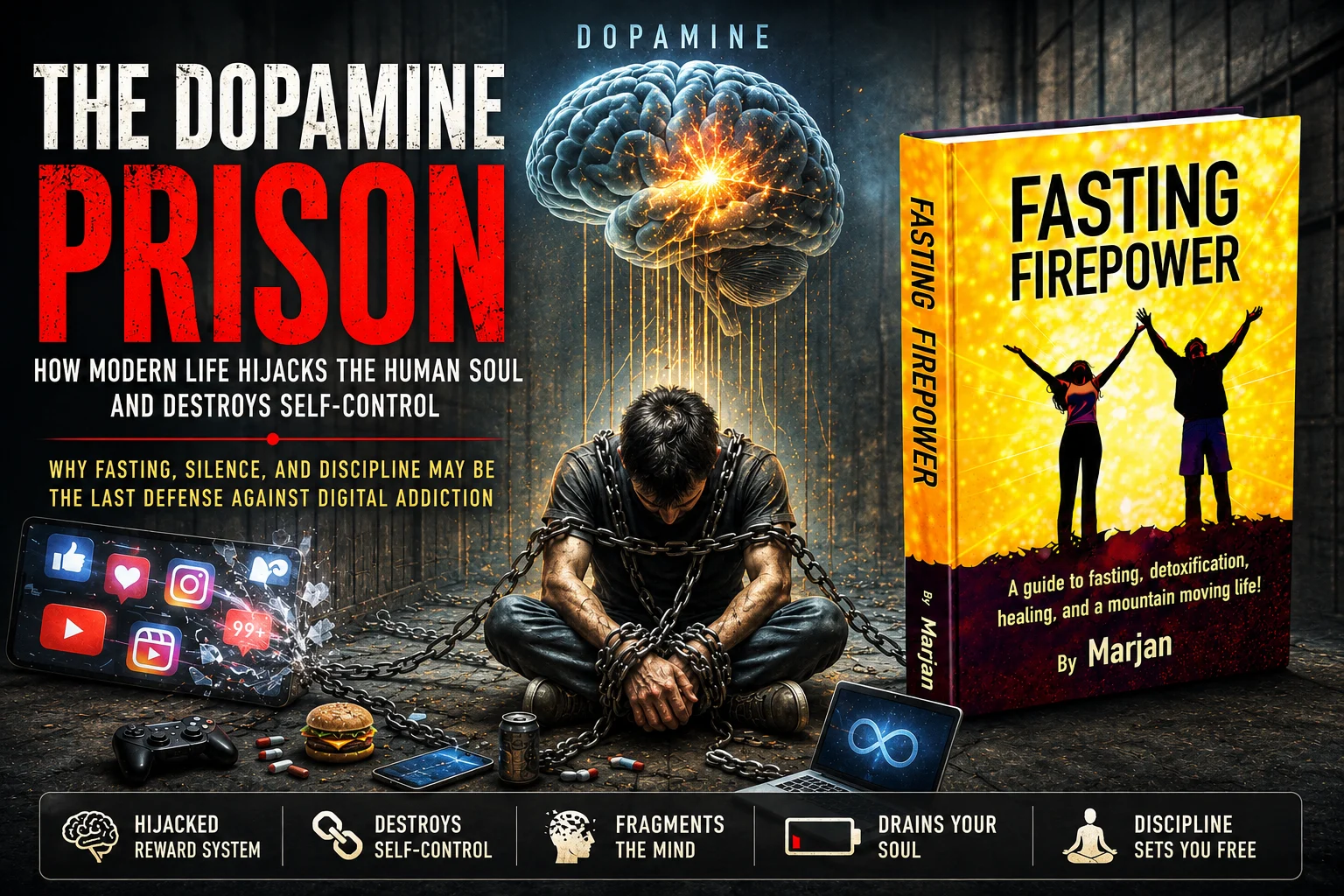
The Dopamine Prison: How Modern Life Hijacks the Human Soul and Destroys Self-Control
Why Fasting, Silence, and Discipline May Be the Last Defense Against Digital Addiction
We live in an age of unprecedented convenience, comfort, stimulation, and entertainment. Humanity has never possessed more technology, more instant gratification, or more ways to escape boredom. Yet millions of people feel exhausted, emotionally unstable, distracted, anxious, spiritually numb, and unable to focus for more than a few minutes at a time.
Something is wrong.
The modern world does not merely compete for human attention anymore—it feeds on it. Every notification, autoplay video, outrage headline, processed snack, endless scroll, flashing advertisement, and algorithmically engineered dopamine hit is part of a larger system designed to keep the brain craving more while giving the soul less.
Many people sense this instinctively. They feel mentally fragmented. Their concentration weakens. Their patience disappears. Silence becomes uncomfortable. Stillness feels unnatural. The mind jumps constantly from stimulation to stimulation like a machine overheating from endless input.
The result is a society drowning in information while starving for wisdom.
At the center of this crisis lies one of the most misunderstood chemicals in the human brain: dopamine.
But the real issue is not dopamine itself. Dopamine is not evil. It is essential for motivation, learning, movement, and survival. The danger arises when modern systems continuously exploit the brain’s reward circuitry, trapping people in cycles of compulsive stimulation that slowly erode discipline, emotional resilience, and spiritual clarity.
This is the dopamine prison.
And escaping it may require rediscovering ancient practices modern culture has abandoned: fasting, restraint, solitude, silence, prayer, discipline, and voluntary discomfort.
The Age of Endless Stimulation
For most of human history, the brain operated in environments filled with periods of silence, scarcity, slowness, and reflection. Food required effort. Entertainment was limited. Communication traveled slowly. Solitude was unavoidable.
Today, the average person wakes up and immediately is hit by a storm of stimulation.
Phones buzz before the feet hit the floor. Social media feeds inject outrage, envy, fear, humor, lust, and tribal conflict into the nervous system before breakfast. News headlines compete for emotional reaction—streaming platforms autoplay endless entertainment. Processed foods are engineered for hyper-palatability. Notifications interrupt thought every few minutes. Even moments of waiting—once small pockets of reflection—are now filled with scrolling.
The human brain was never designed for uninterrupted stimulation.
Modern technology has effectively industrialized distraction.
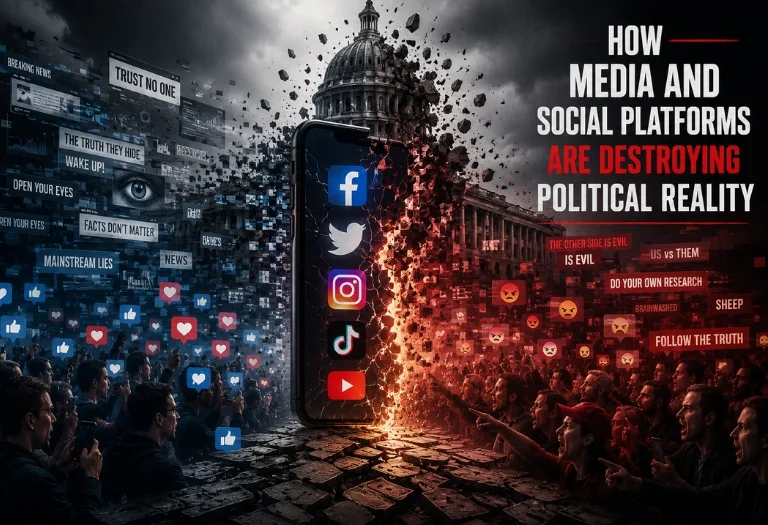
Attention has become one of the world’s most valuable commodities. Entire industries now exist to capture, manipulate, and monetize human focus. Social media platforms compete not merely for usage, but for psychological dependency. Algorithms learn emotional triggers with astonishing precision. The more reactive a person becomes, the more profitable they are.
Outrage spreads faster than wisdom because outrage generates engagement. Fear generates clicks. Novelty generates dopamine. And dopamine keeps people returning. This creates a neurological loop in which the brain craves constant stimulation while losing its tolerance for silence, patience, and delayed gratification. The consequences are visible everywhere:
- collapsing attention spans
- chronic anxiety
- emotional impulsiveness
- digital addiction
- brain fog
- inability to focus
- compulsive scrolling
- rising loneliness
- shallow thinking
- spiritual exhaustion
Many people are overstimulated but undernourished psychologically and spiritually. The mind becomes crowded while the inner life becomes empty.
What Dopamine Actually Does
Dopamine is often misunderstood as the brain’s “pleasure chemical,” but its role is more complex than simple happiness. Dopamine is heavily involved in:
- motivation
- anticipation
- reward-seeking
- learning
- habit formation
- novelty detection
In many cases, dopamine spikes not when people receive rewards, but when they anticipate them. That anticipation mechanism is precisely what modern technology exploits. Social media platforms, video feeds, gambling systems, and even processed foods rely on variable reward schedules—unpredictable bursts of stimulation that keep the brain searching for the next hit. A person scrolling online never knows what comes next:
- an exciting post
- shocking news
- emotional outrage
- validation
- humor
- conflict
- attraction
- social approval
That uncertainty intensifies compulsive behavior. The brain begins chasing stimulation automatically. Over time, ordinary life can start feeling dull by comparison. Reading becomes difficult. Stillness feels unbearable. Silence creates discomfort. People lose the ability to sit alone with their own thoughts. The nervous system adapts to constant novelty, requiring ever-greater stimulation to maintain engagement.
This is one reason many people today struggle to finish books, sustain conversations, pray consistently, or concentrate deeply. Their attention has been conditioned into fragmentation. The issue is not intelligence. It is overstimulation.
The Collapse of Self-Control
One of the most damaging consequences of dopamine overload is the erosion of self-control. Human beings become psychologically weaker when every discomfort is instantly removed. Modern culture aggressively promotes immediate gratification:
- instant entertainment
- instant delivery
- instant validation
- instant food
- instant stimulation
- instant outrage
- instant escape
Very little encourages endurance anymore. Yet emotional resilience is built through resistance, patience, and discomfort. A person who never practices restraint eventually loses the ability to resist impulse. This affects every area of life:
- health
- relationships
- finances
- attention
- emotional stability
- spirituality
- creativity
Discipline is like a muscle. When neglected, it weakens. Modern systems often reward impulsiveness while punishing stillness. Constant consumption becomes normalized. Reflection becomes rare. Many people spend more time reacting than thinking. The result is psychological fragility. Small inconveniences become major stressors. Silence becomes threatening. Solitude feels unbearable. Many individuals cannot sit quietly for 10 minutes without seeking stimulation.
This is not accidental.
A distracted population is easier to influence, market to, and emotionally manipulate.
The Business Model of Addiction
Many of the world’s most profitable industries depend on human dependency. Social media companies profit from attention. Processed food companies profit from cravings. Streaming services profit from binge behavior. Advertising industries profit from insecurity. News cycles profit from outrage and fear.
The longer people remain emotionally reactive and psychologically overstimulated, the more profitable they become. This does not necessarily require a conspiracy. Incentives alone are enough. Algorithms are trained to maximize engagement, not wisdom. And human biology is vulnerable to manipulation.
Highly processed foods are engineered to override satiety signals. Endless scrolling exploits novelty-seeking behavior. Notification systems create anticipation loops. Emotional headlines trigger fear responses that keep users clicking. The modern economy increasingly rewards addiction patterns. Unfortunately, the human cost is enormous. People lose:
- sustained focus
- inner calm
- patience
- emotional regulation
- contemplative thought
- spiritual awareness
The nervous system remains permanently activated. Many individuals are no longer truly resting. They are merely switching between different forms of stimulation.
The Spiritual Cost of Constant Noise
Perhaps the greatest damage caused by overstimulation is spiritual numbness. Human beings require silence for self-examination. Wisdom rarely emerges from chaos. Reflection requires space. But modern life fills nearly every quiet moment with noise. Many people fear silence because silence forces confrontation with deeper realities:
- unresolved pain
- anxiety
- guilt
- loneliness
- existential questions
- spiritual emptiness
Continuous stimulation becomes a form of escape. People no longer sit by themselves. They anesthetize themselves. Some drown in entertainment. Others drown in outrage.
Others drown in endless productivity. But distraction cannot heal the soul. Throughout history, many spiritual traditions recognized that excessive indulgence weakens perception and clarity. Prophets, monks, philosophers, desert ascetics, and disciplined thinkers often embraced restraint deliberately—not because suffering itself was holy, but because endless consumption clouds judgment.
Stillness sharpens awareness. Silence reveals truth. Fasting exposes dependency. Discomfort reveals character. Modern culture often treats discomfort as an enemy to be eliminated. Yet growth frequently emerges through voluntary hardship and disciplined restraint.
Fasting: The Ancient Weapon Modern Society Forgot
Fasting may be one of humanity’s oldest tools for reclaiming mastery over impulse. For thousands of years, fasting has existed across cultures and spiritual traditions:
- Christianity
- Judaism
- Buddhism
- Stoicism
- monastic traditions
- warrior disciplines
While fasting is often associated with food, its deeper purpose extends beyond physical abstinence. Fasting interrupts automatic behavior. It exposes compulsions. It rekindles desire. It reminds the mind that discomfort is survivable.
Modern people are conditioned to satisfy cravings immediately. Fasting reverses that conditioning. It teaches the nervous system that urges do not need instant obedience. This has profound psychological effects. When individuals voluntarily deny themselves stimulation—even temporarily—they begin rebuilding self-command. The mind grows quieter. Attention sharpens. Impulsiveness weakens. Emotional awareness increases.
Many people discover that fasting affects far more than appetite. It reveals how much of life is driven by unconscious habit. Food is only one layer. People often realize they are equally dependent on:
- phones
- noise
- validation
- entertainment
- stimulation
- social approval
Fasting becomes less about deprivation and more about liberation.
Why Deliberate Hardship Builds Strength
Modern culture often equates comfort with happiness, but endless comfort can produce weakness. Human resilience has historically developed through challenge:
- physical labor
- scarcity
- endurance
- discipline
- uncertainty
- delayed gratification
When people voluntarily embrace controlled discomfort, they often become psychologically stronger. This explains the growing interest in practices such as:
- fasting
- cold exposure
- long-distance walking
- meditation
- silence retreats
- disciplined exercise
- digital detoxes
- solitude
These practices interrupt compulsive reward cycles and restore nervous system balance. More importantly, they teach an increasingly rare skill: The ability to remain calm without constant stimulation. That ability may become one of the defining survival skills of the modern age.
Reclaiming Attention in the Digital Era
Escaping the dopamine prison does not require abandoning technology entirely. Technology itself is not the enemy. The real danger is unconscious dependency. People must learn to use technology intentionally instead of compulsively. Practical changes can dramatically improve mental clarity:
- disabling nonessential notifications
- limiting social media exposure
- practicing intermittent fasting
- scheduling periods of silence
- reading long-form books
- walking without headphones
- reducing processed foods
- avoiding constant multitasking
- spending time in nature
- creating device-free hours
These practices help restore attentional stability. At first, silence may feel uncomfortable. Many people experience restlessness when reducing stimulation because their nervous systems have adapted to constant input. But eventually, the mind begins slowing down.
- Thought deepens.
- Focus returns.
- Creativity improves.
- Inner calm strengthens.
- The brain remembers how to exist without perpetual interruption.
Why Attention Is Now a Form of Freedom
In previous generations, freedom was often understood in political or economic terms. Today, freedom increasingly includes the ability to control one’s own attention. A person incapable of sustained focus becomes vulnerable to manipulation. A person addicted to stimulation becomes easier to influence emotionally. A person unable to tolerate silence may never develop deep self-awareness.
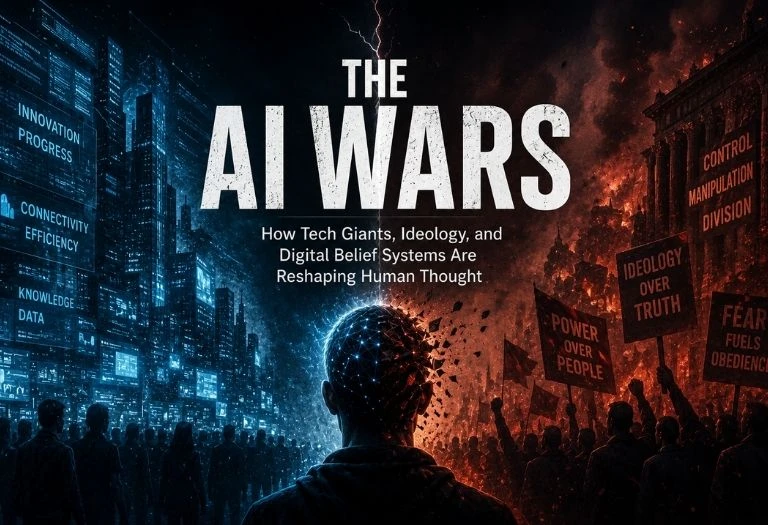
Attention is now a battleground. Every day, corporations, platforms, advertisers, and algorithms compete to direct human thought and behavior. Many people surrender their mental space without realizing it. Protecting attention has become an act of resistance. Discipline has become countercultural. Silence has become revolutionary.
And fasting—whether from food, noise, media, or compulsive stimulation—may be one of the few remaining ways to reclaim sovereignty over the mind.
The Return to Stillness
Modern society offers endless stimulation but very little peace.
People are connected constantly, yet often feel profoundly disconnected internally. Many individuals consume more information in a single day than previous generations encountered in weeks, yet wisdom remains scarce. The human soul was not designed for permanent distraction. It requires:
- stillness
- reflection
- restraint
- contemplation
- silence
- discipline
The dopamine prison convinces people they are free while keeping them dependent on endless consumption. But freedom begins when a person can sit quietly without craving escape. Freedom begins when algorithms no longer own attention. Freedom begins when impulse no longer dictates behavior. And sometimes, the path back to clarity starts with something surprisingly simple:
- Turning off the noise.
- Skipping the endless scroll.
- Sitting in silence.
- And learning once again how to be still.
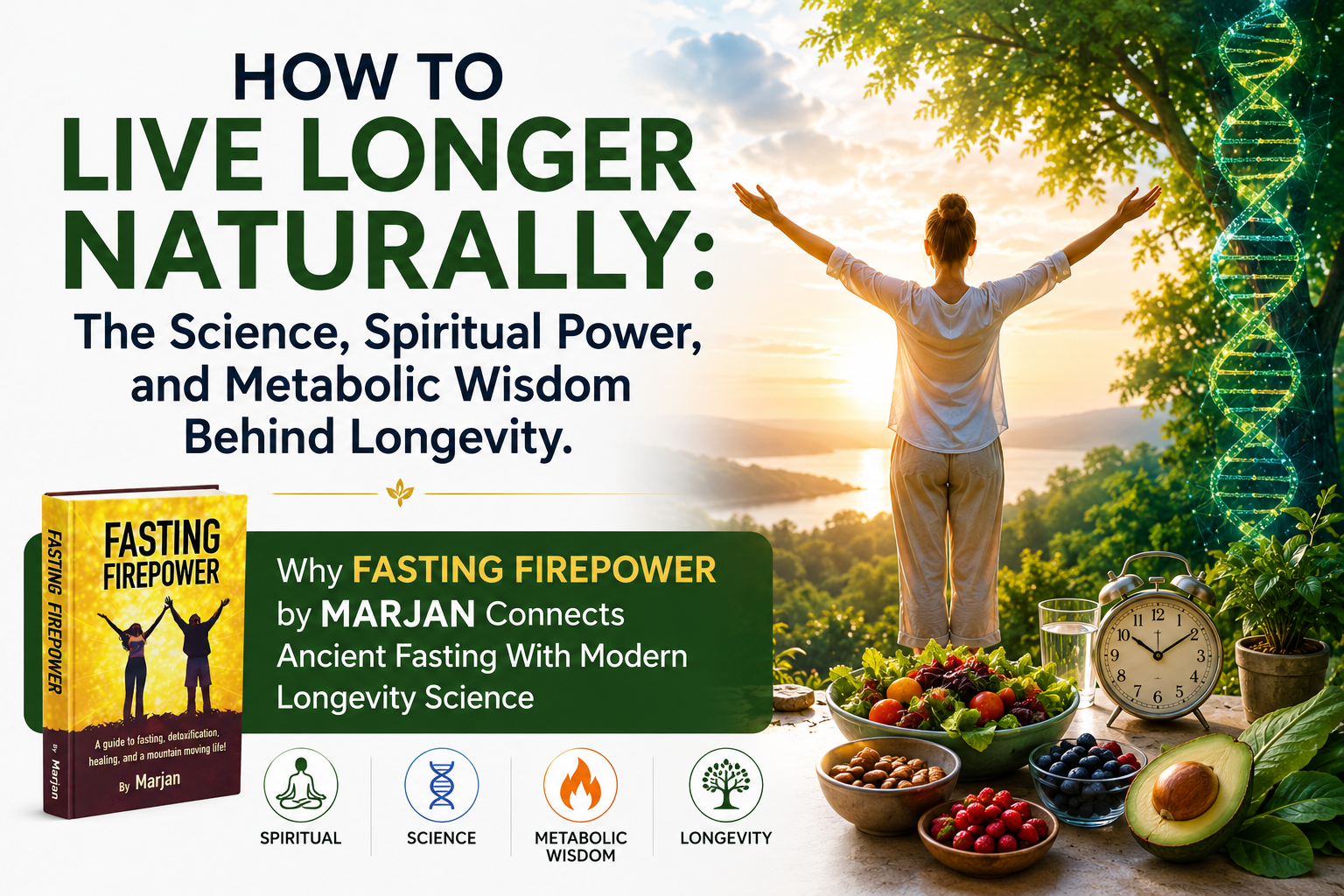
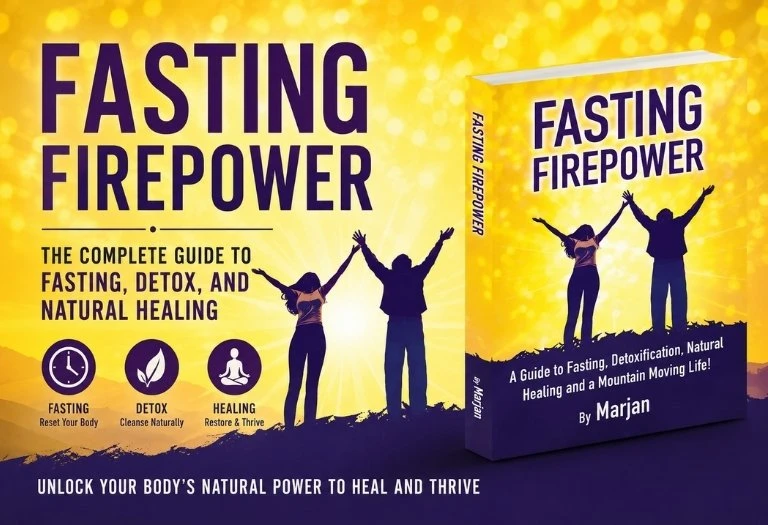
How does Fasting Firepower Connect to the Dopamine Crisis? In Fasting Firepower by Marjan, fasting is presented not merely as a dietary practice but as a form of spiritual and psychological resistance against modern dependency systems. The book explores how voluntary restraint can restore clarity, discipline, emotional balance, and inner strength in a culture engineered for overstimulation.
Many of the problems described throughout this article—digital addiction, emotional exhaustion, fragmented attention, compulsive behavior, spiritual numbness, and weakened self-control—share a common root: the loss of mastery over impulse. Fasting Firepower addresses this directly by emphasizing:
- self-discipline through voluntary discomfort
- neurological and emotional reset through fasting
- breaking compulsive reward cycles
- spiritual clarity through silence and restraint
- rebuilding mental resilience
- detoxification of both body and mind
- reclaiming focus in an age of distraction
- spiritual awareness
- inner calm
The central message of Fasting Firepower aligns closely with the core warning of the dopamine prison: A person who cannot say “no” impulses eventually loses their freedom.
Fasting retrains the mind to resist automatic gratification. It teaches patience in an impatient culture, stillness in a noisy culture, and self-command in a culture driven by endless consumption.
In many ways, fasting becomes the antidote to dopamine slavery. While modern systems condition people toward dependency, distraction, and emotional reactivity, fasting strengthens the exact qualities necessary for freedom.