Essential Water Purification Methods: What Actually Works and Why It Matters
Safe drinking water is something most people take for granted. Turn on the tap, fill a glass, and drink. But what is actually coming out of that tap may be far more complex than it looks.
According to Diet for a Poisoned Planet, less than 1% of the Earth’s surface water is safe to drink without treatment. Between 10% and 40% of private wells are contaminated. And the list of substances entering public water supplies continues to grow, including industrial chemicals and pharmaceutical residues, pesticides, microplastics, and radioactive particles.
Humans are now exposed to an estimated 150,000 chemicals in daily life, with roughly 1,500 new chemicals introduced every year. Many of these eventually reach the water supply, and most water treatment infrastructure was built long before these contaminants existed.
The CDC estimates that at least 1.1 million Americans fall ill each year from waterborne contaminants. That number likely understates the problem, since many cases go undiagnosed or are attributed to other causes.
The good news is that effective water purification is not complicated or expensive. Understanding your options is the first step.
Why Tap Water Is Not Always Safe
Most municipal water treatment plants were designed decades ago to handle bacterial and sediment contamination. They were not built to detect or remove many of the modern threats now present in water sources.
Contaminants that routinely slip through conventional treatment include:
- Heavy metals such as lead and arsenic
- Pharmaceutical drugs, including antibiotics, hormones, and antidepressants
- Industrial solvents and agricultural pesticides
- Per- and polyfluoroalkyl substances, commonly known as PFAS or forever chemicals
- Certain viruses and parasites
- Radiological contaminants
Private wells carry additional risks. Without centralized oversight, contamination from nearby agricultural runoff, septic systems, or industrial activity often goes undetected for years.
Understanding what is in your water starts with getting it tested. The Environmental Working Group’s Tap Water Database allows you to search for contaminants detected in your local water supply by zip code.
7 Water Purification Methods Compared
Not every method removes the same contaminants. The right choice depends on your specific water quality concerns, budget, and lifestyle.
1. Boiling Water
Boiling is the oldest and most accessible purification method. Bringing water to a rolling boil for at least 1 minute effectively kills bacteria, viruses, and most parasites.
However, boiling has clear limitations. It does not remove heavy metals, chlorine, microplastics, pesticides, or chemical compounds. It also concentrates some dissolved solids by reducing water volume. Boiling is a reliable emergency measure but not a long-term standalone solution.
At higher altitudes, water boils at lower temperatures, so the CDC recommends boiling for at least 3 minutes above 6,500 feet in elevation.
2. Spring Water
Water sourced directly from a natural spring can be genuinely clean, but purity varies significantly depending on the source location, surrounding land use, and geological conditions.
If you collect or purchase spring water, have it independently tested. Labeling is not always accurate, and some products marketed as spring water are simply filtered municipal tap water.
3. Iodine Tablets
Iodine tablets are a practical, lightweight option for camping, hiking, and emergency preparedness. They effectively neutralize bacteria and viruses within 30 minutes in clear water.
They are less effective against Cryptosporidium, a chlorine- and iodine-resistant parasite. They also leave an unpleasant taste and are not recommended for pregnant women, people with thyroid conditions, or anyone using them as a regular long-term solution.
4. Deionization
Deionization uses ion-exchange resins to remove dissolved mineral salts and ionic compounds from water, producing very high-purity water. It is widely used in laboratory and industrial settings.
While deionization effectively removes most inorganic contaminants, it does not reliably remove bacteria, viruses, or organic chemicals. It is often used in combination with other filtration methods rather than as a standalone system.
5. Activated Carbon, UV Sterilization, and Sediment Filtration
These three methods are often combined in multi-stage home filtration systems.
Activated carbon filters use adsorption to capture chlorine, volatile organic compounds, certain pesticides, and compounds that cause taste and odor issues. They do not remove dissolved minerals, heavy metals, or microbial contaminants on their own.
UV sterilization exposes water to ultraviolet light, which destroys the DNA of bacteria, viruses, and protozoa, preventing them from reproducing. It does not remove physical or chemical contaminants, so it works best after pre-filtration.
Sediment filters physically remove particles like rust, dirt, sand, and silt. They are typically the first stage in a multi-filter system, protecting downstream filters from clogging.
Together, these three components address a broad range of water quality issues and are found in many quality countertop and under-sink systems.
6. Reverse Osmosis
Reverse osmosis forces water through a semi-permeable membrane under pressure, blocking contaminants that cannot pass through the membrane’s microscopic pores. Quality RO systems claim removal rates of up to 99% for a wide range of contaminants, including heavy metals, nitrates, fluoride, dissolved solids, certain bacteria, and many industrial chemicals.
The Water Quality Association recognizes reverse osmosis as one of the most comprehensive home water treatment technologies available.
One consideration: RO systems produce wastewater during the filtration process, typically two to four gallons of waste per gallon of purified water, depending on system efficiency. Some modern systems have significantly improved this ratio. RO water also lacks naturally occurring minerals, which some users choose to restore through remineralization filters.
7. Distillation
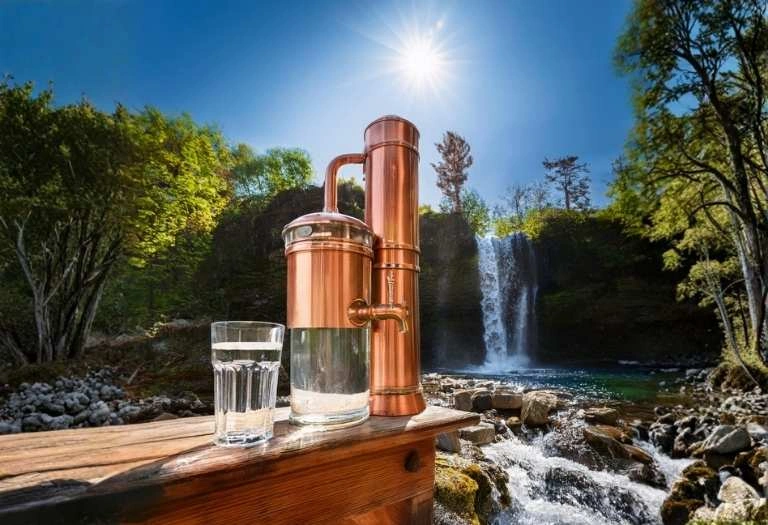
Distillation heats water until it becomes steam, then condenses that steam back into liquid form. Contaminants that cannot vaporize at water’s boiling point are left behind.
Distillation effectively removes heavy metals, bacteria, viruses, nitrates, dissolved solids, and many chemical compounds. The result is extremely pure water.
Some contaminants with boiling points similar to water, such as certain volatile organic compounds, can carry over into distilled water. High-quality distillers include activated carbon post-filters to address this. Distilled water, like RO water, is mineral-free. For those pursuing it for health or detoxification purposes, this is often considered a benefit rather than a drawback.
Choosing the Right Method for Your Situation
No single method is ideal for every person or every water source. Here is a general framework for choosing:
For emergencies or travel: Boiling or iodine tablets.
For everyday home use on a budget: A quality activated carbon pitcher filter or countertop unit.
For comprehensive home filtration: A reverse osmosis system with pre-and post-filters, or a combination of UV, sediment, and carbon filtration.
For the highest purity output: Distillation, particularly with a carbon post-filter.
If you are on a private well, professional water testing is essential before choosing a filtration approach. Contaminant profiles vary considerably, and the wrong filter for your specific water can create a false sense of security.
FAQs About Water Purification
Is boiled water the same as purified water?
No. Boiling kills biological contaminants but does not remove heavy metals, chemicals, or microplastics. Purification typically involves filtration or distillation processes that address a broader spectrum of contaminants.
Does reverse osmosis remove fluoride?
Yes. Reverse osmosis is one of the most effective methods for removing fluoride from drinking water, along with activated alumina and distillation.
Is distilled water safe to drink every day?
Yes, distilled water is safe for regular consumption. Some practitioners recommend it specifically for detoxification. Since it lacks minerals, those following a distilled water regimen long-term should ensure adequate mineral intake through diet.
How do I know what contaminants are in my water?
Request a water quality report from your utility provider, use the EWG Tap Water Database, or have your water independently tested through a certified lab. For private wells, annual testing is strongly recommended.
Are water filter pitchers effective?
Pitcher filters with activated carbon, such as Brita or ZeroWater, effectively reduce chlorine, some heavy metals, and taste-affecting compounds. They are not sufficient for removing bacteria, viruses, or a wide range of chemical contaminants. Pitchers are a reasonable step up from unfiltered tap water but are not a comprehensive solution.
What is the best water purification method for home use?
For most households, a whole-house sediment and carbon filter combined with an under-sink reverse osmosis system offers the best balance of comprehensive protection, convenience, and cost over time.
Conclusion
The quality of the water you drink directly affects your health, even when the effects are gradual and difficult to trace. Water treatment infrastructure is improving, but it has not kept pace with the expanding range of contaminants entering water sources worldwide.
Taking responsibility for your own water quality does not require an expensive or complicated setup. Whether you start with a quality carbon filter, invest in a reverse osmosis system, or use a home distiller, any meaningful step toward cleaner water is worthwhile.
For deeper reading on water quality, fasting, and natural detoxification, visit www.marjanbooks.com and explore additional articles and resources drawn from over 50 years of research and global study on these topics.